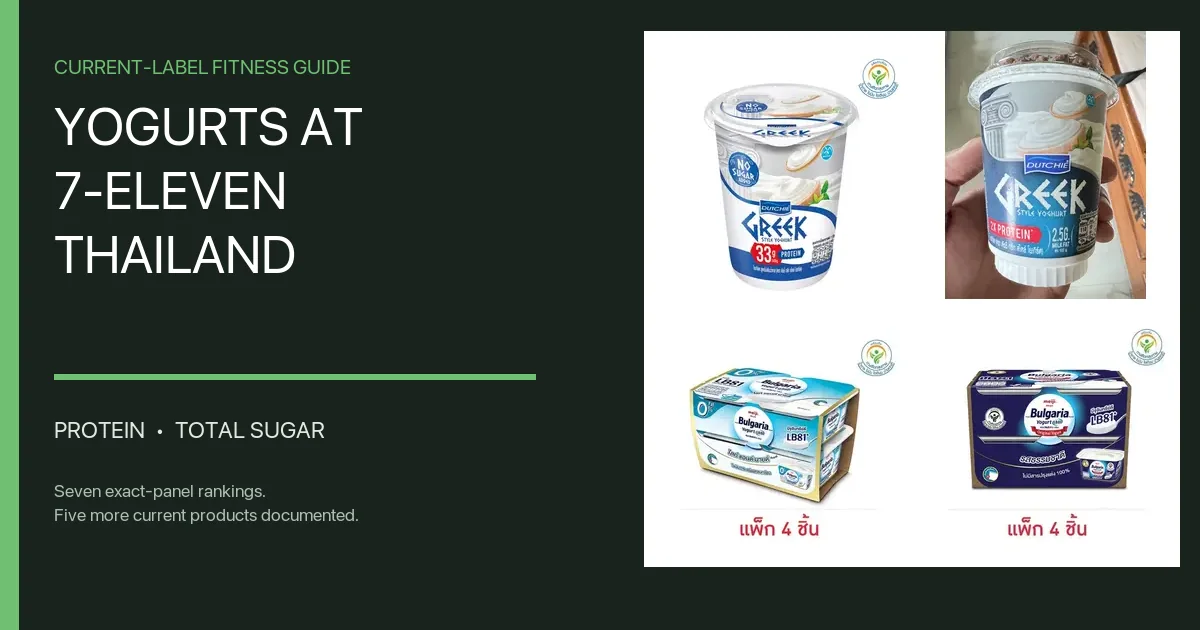
What this guide includes
We captured 30 live listings in the official AllOnline yogurt-cups category on 20 August 2026 and checked the broader official yogurt search for large tubs. One additional current cup, Dutchie Greek Style 2X Protein, was photographed in a 7-Eleven branch that day even though it was absent from the online snapshot. The category mixes flavors, duplicate promotional packs, and two drinkable yogurts. The main rankings therefore compare only spoonable products and collapse promotional duplicates.
The evidence order is:
- the nutrition panel or GDA visible on the exact current package;
- the exact current AllOnline product page for identity, size, price, and SKU;
- an official manufacturer panel that matches the same name and size; and
- third-party databases only as conflict checks, never as silent replacements.
Transparent scorecard
Container sizes range from 110 g cups to a 1 kg tub, so ranking whole containers would reward packaging rather than yogurt. Both leaderboards use the same denominator:
- Protein density = label protein ÷ label serving weight × 100.
- Total sugar density = label total sugar ÷ label serving weight × 100.
We also show the label serving or cup values so you can see the amount actually eaten. The two Greek tubs are normalized to a 150 g comparison portion; that is not a claim that everybody should eat exactly 150 g.
Total sugar is not the same as added or free sugar. Thai panels declare total sugar, which can include lactose naturally present in milk. “No sugar added” therefore does not mean 0 g total sugar. The WHO free-sugars guideline excludes the sugars naturally present in milk, so it would be incorrect to compare every gram in this table directly with a free-sugar limit.
Ranked by protein per 100 g
| Rank | Yogurt | Protein / 100 g | Total sugar / 100 g | Label cup or portion |
|---|---|---|---|---|
| 1 | Dutchie Greek, no sugar added | 7.67 g | 4.42 g | 11.5 g protein / 150 g |
| 2 | Dutchie Greek Style 2X Protein | 7.50 g | 8.33 g | 9 g protein / 120 g cup |
| 3 | Meiji Greek Natural | 4.67 g | 4.00 g | 7 g protein / 150 g |
| 4 | Meiji Bulgaria 0% fat | 4.55 g | 4.55 g | 5 g protein / 110 g |
| 5= | Meiji Bulgaria Natural | 3.64 g | 3.64 g | 4 g protein / 110 g |
| 5= | Meiji Bulgaria Golden Honey | 3.64 g | 12.73 g | 4 g protein / 110 g |
| 5= | Meiji Bulgaria Mellow | 3.64 g | 13.64 g | 4 g protein / 110 g |
The Dutchie tub figure comes from its 33 g-per-430 g package declaration. The 150 g amount is calculated for comparability, not printed as a serving on that package. The photographed Dutchie cup declares 9 g protein for the complete 120 g container.
Ranked by lowest total sugar per 100 g
| Rank | Yogurt | Total sugar / 100 g | Protein / 100 g | Sugar in cup or 150 g portion |
|---|---|---|---|---|
| 1 | Meiji Bulgaria Natural | 3.64 g | 3.64 g | 4 g / 110 g cup |
| 2 | Meiji Greek Natural | 4.00 g | 4.67 g | 6 g / 150 g |
| 3 | Dutchie Greek, no sugar added | 4.42 g | 7.67 g | 6.6 g / 150 g |
| 4 | Meiji Bulgaria 0% fat | 4.55 g | 4.55 g | 5 g / 110 g cup |
| 5 | Dutchie Greek Style 2X Protein | 8.33 g | 7.50 g | 10 g / 120 g cup |
| 6 | Meiji Bulgaria Golden Honey | 12.73 g | 3.64 g | 14 g / 110 g cup |
| 7 | Meiji Bulgaria Mellow | 13.64 g | 3.64 g | 15 g / 110 g cup |
Small differences should not be treated as laboratory precision: Thai labels use rounded serving values. The useful split is the low-sugar cluster around 3.6–4.6 g/100 g, the 2X Protein cup at 8.33 g/100 g, and the two sweeter Bulgaria flavors above 12 g/100 g.
Protein + sugar: sortable comparison
Tap or click a heading to sort. Product names link directly to the individual verdicts below.
Sorted by protein per 100 g, highest to lowest.
| Dutchie Greek, no sugar added | 7.67 g | 4.42 g | 76.7 | 150 g | 11.5 g | 6.6 g | ฿27.21 |
| Dutchie Greek Style 2X Protein | 7.50 g | 8.33 g | 91.7 | 120 g cup | 9 g | 10 g | Not recorded |
| Meiji Greek Natural | 4.67 g | 4.00 g | 106.7 | 150 g | 7 g | 6 g | ฿25.35 |
| Meiji Bulgaria 0% fat | 4.55 g | 4.55 g | 40.9 | 110 g cup | 5 g | 5 g | ฿21.25 |
| Meiji Bulgaria Natural | 3.64 g | 3.64 g | 54.5 | 110 g cup | 4 g | 4 g | ฿21.25 |
| Meiji Bulgaria Golden Honey | 3.64 g | 12.73 g | 90.9 | 110 g cup | 4 g | 14 g | ฿21.25 |
| Meiji Bulgaria Mellow | 3.64 g | 13.64 g | 90.9 | 110 g cup | 4 g | 15 g | ฿21.25 |
Listed cup prices are the live four-pack price divided by four. Tub prices are prorated to 150 g. The photographed Dutchie cup's 7-Eleven branch price was not recorded, so it stays blank in price sorting. Branch prices, promotions, and stock can differ.
What to choose by use case
It gives 7.67 g protein per 100 g, only slightly ahead of the photographed 2X Protein cup at 7.50 g. Label rounding makes that small gap less meaningful than the old gap to the rest of the set.
Four grams in a 110 g cup. It wins the declared total-sugar calculation even though it does not carry the flashiest front claim.
Nine grams protein in one 120 g cup, the largest verified single-cup dose here. Its 10 g total sugar is higher than the four low-sugar leaders.
The best protein density while remaining in the low-sugar cluster. A 150 g portion provides about 11.5 g protein and 6.6 g total sugar.
45 kcal per cup. Calorie control is not automatically the same goal as maximizing recovery protein.
It is the current soy option in the catalog, but remains unranked because the live gallery did not provide a complete exact protein-and-sugar pair.
None of the normal cup or 150 g portions reaches 20 g protein alone. If a larger recovery dose fits your needs, increase the yogurt portion or pair it with another verified protein food rather than assuming the word “Greek” guarantees a specific number.
What yogurt research can—and cannot—tell us
A 12-week randomized study in 30 untrained university-aged men compared fat-free plain Greek yogurt with an isoenergetic carbohydrate pudding during resistance and plyometric training. The yogurt group consumed 20 g protein per dose and showed larger gains in several strength, muscle-thickness, and body-composition outcomes. It supports Greek yogurt as a plausible whole-food protein option; it does not prove that any brand in this table causes those results.
The dose boundary matters. A 150 g portion of the Dutchie tub provides about 11.5 g protein, the photographed Dutchie cup provides 9 g, and 150 g of Meiji Greek provides 7 g. The trial used a different product, a larger protein dose, a small specific population, and a training program. We use it as context—not as a marketing claim for the ranked products.
Sugar research needs a second boundary. WHO recommendations address free sugars, while this guide can compare only the total sugar printed on Thai labels. Lactose naturally present in plain yogurt is part of total sugar but not WHO free sugar. The label does not split every product's total into lactose versus added sugar, so we do not invent that split.
Seven exact-panel yogurt verdicts
Per-100 g figures drive the ranks; cup or 150 g figures show a practical amount.
#1 protein · #3 lowest total sugar
Dutchie Greek Style Yogurt, No Sugar Added
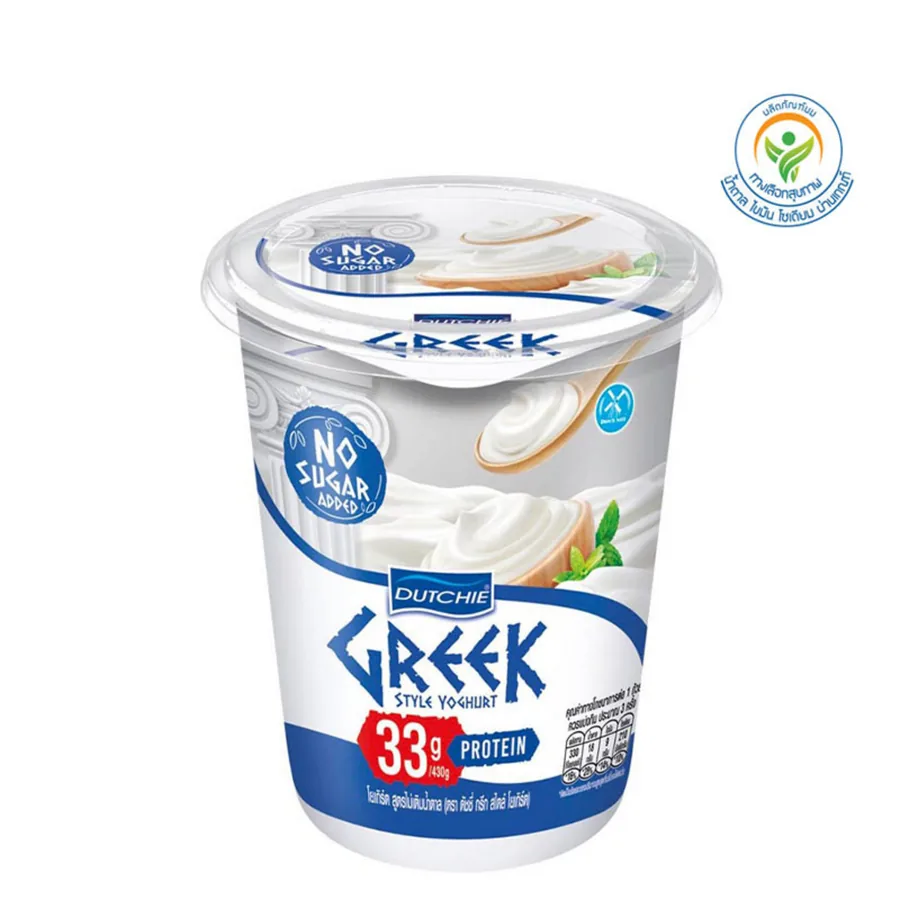
430 g · ฿78 · per 100 g: 76.7 kcal, 7.67 g protein, 4.42 g total sugar.
The clear protein-density winner. Its package declares 33 g protein, 19 g sugar, and 330 kcal for the full 430 g tub; those whole-container numbers are normalized here. A 150 g portion works out to about 11.5 g protein and 6.6 g total sugar.
AllOnline product ID 346289 · SKU 723382010.
#2 protein · #5 lowest total sugar
Dutchie Greek Style 2X Protein, Original
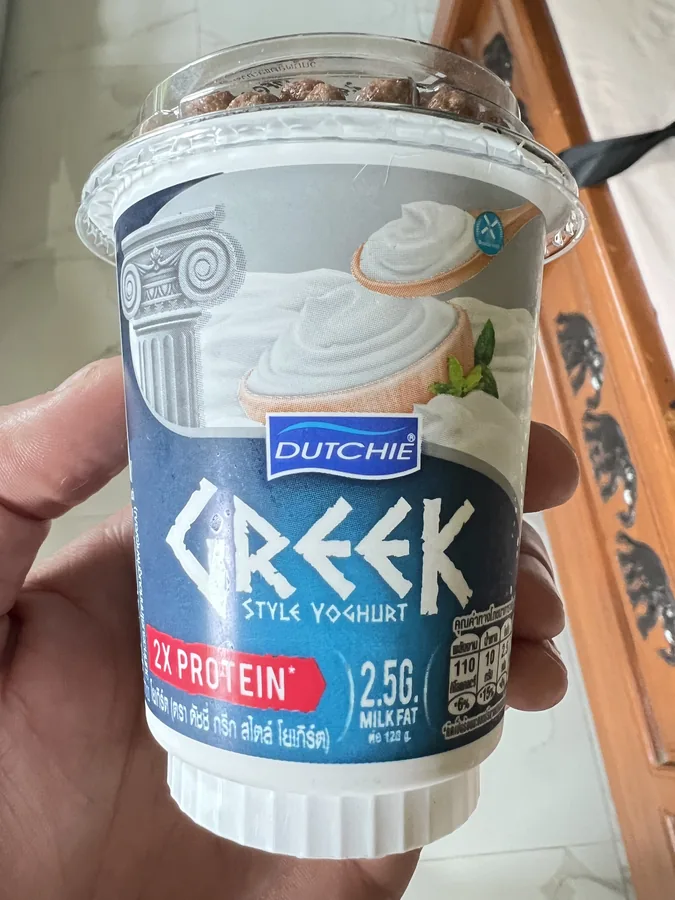
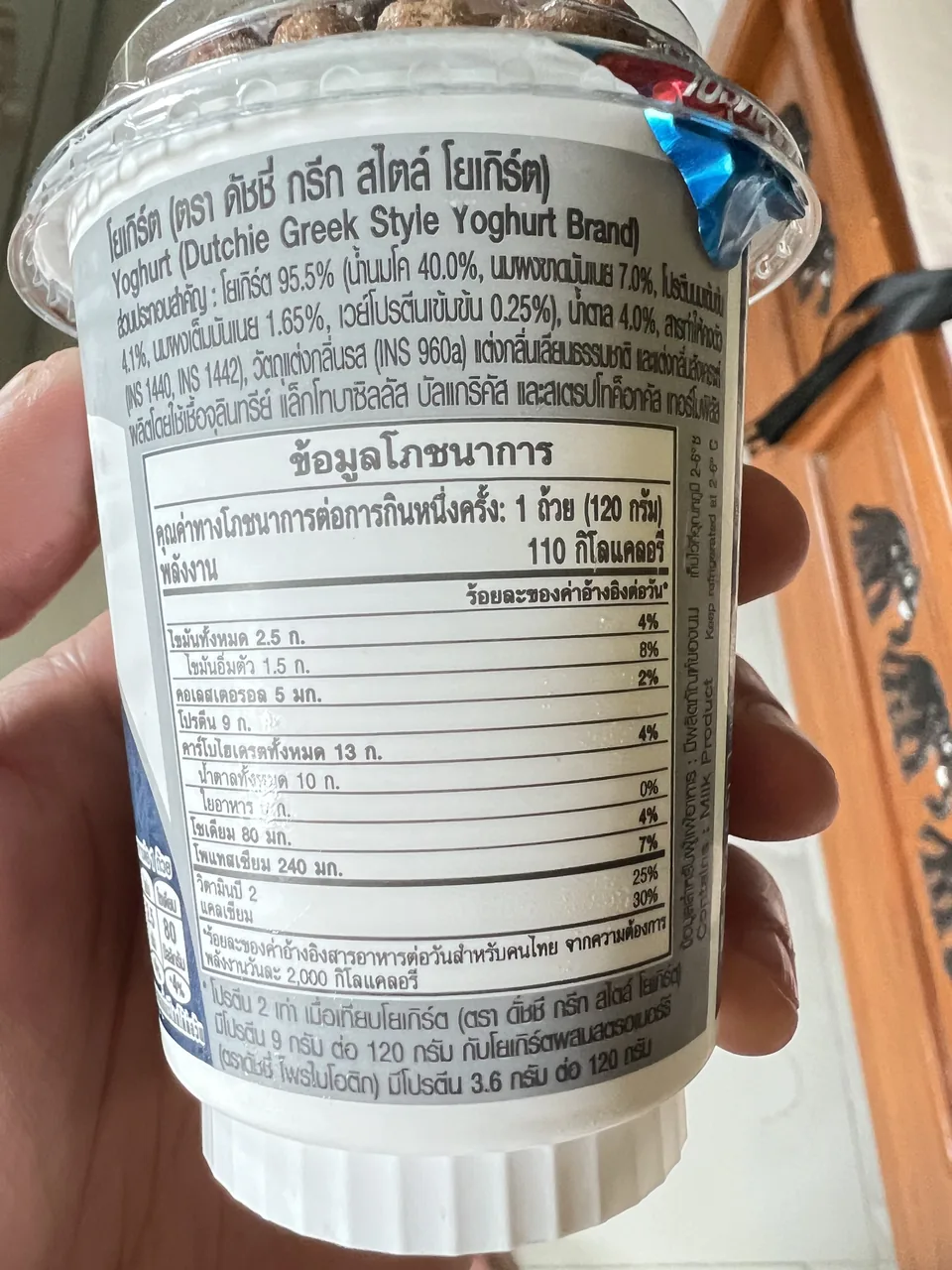
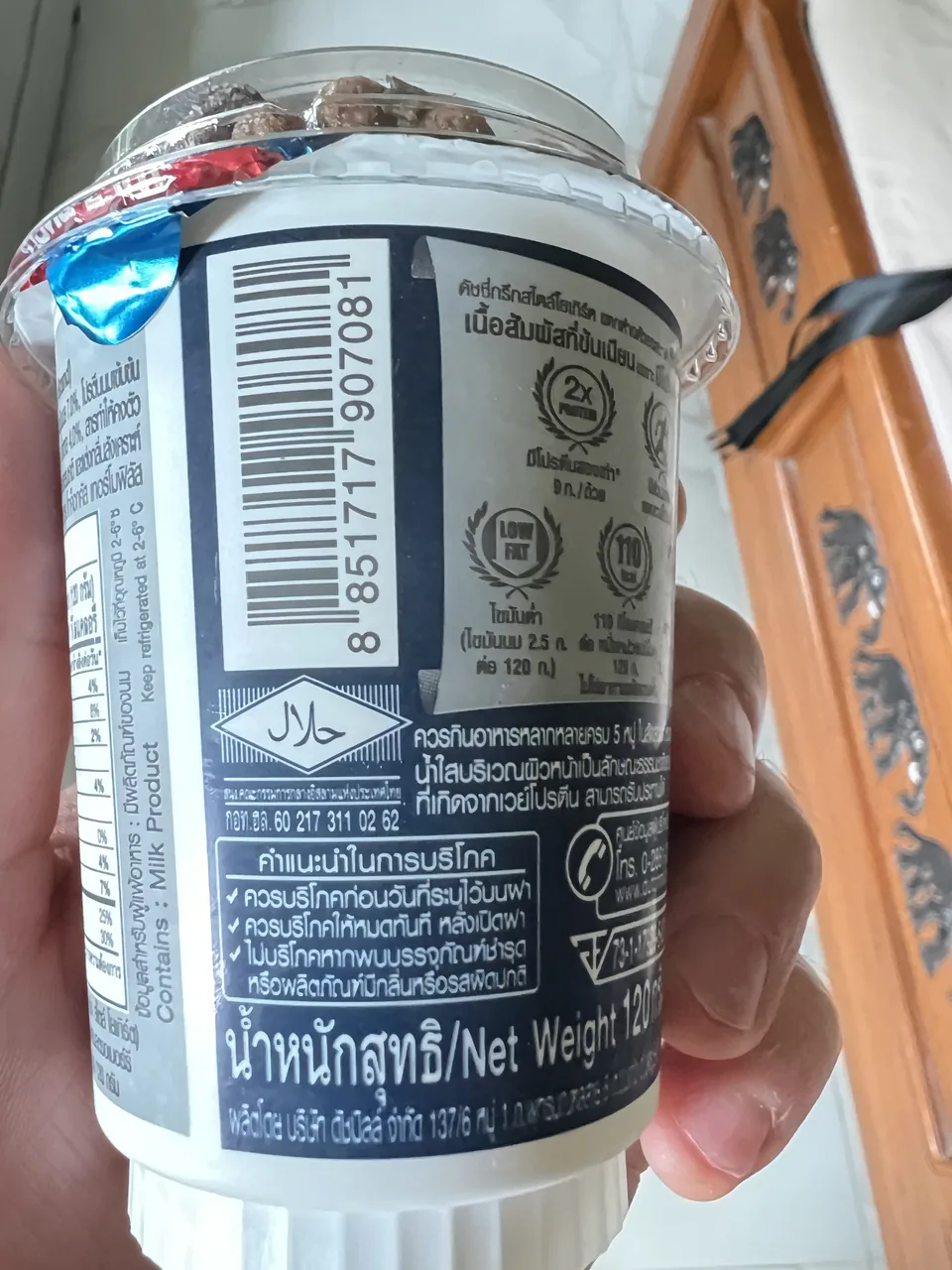
120 g cup · 7-Eleven branch price not recorded · 110 kcal · 9 g protein · 10 g total sugar.
This is the strongest verified single cup and almost ties the large Dutchie tub for protein density: 7.50 g protein per 100 g versus 7.67 g. Its 8.33 g total sugar per 100 g places it outside the low-sugar cluster, so the 2X Protein claim should not be read as a low-sugar claim.
The photographed Thai panel states one container (120 g) and also declares 2.5 g fat, 13 g carbohydrate, 80 mg sodium, and 240 mg potassium. At this update, major Thai retailers listed the same barcode around ฿22–23, but that is not substituted for an unrecorded 7-Eleven branch price.
Current package photographed in a 7-Eleven branch on 20 August 2026 · barcode 8851717907081 · label photos are the nutrition source of truth.
#3 protein · #2 lowest total sugar
Meiji Greek Style Yogurt, Natural
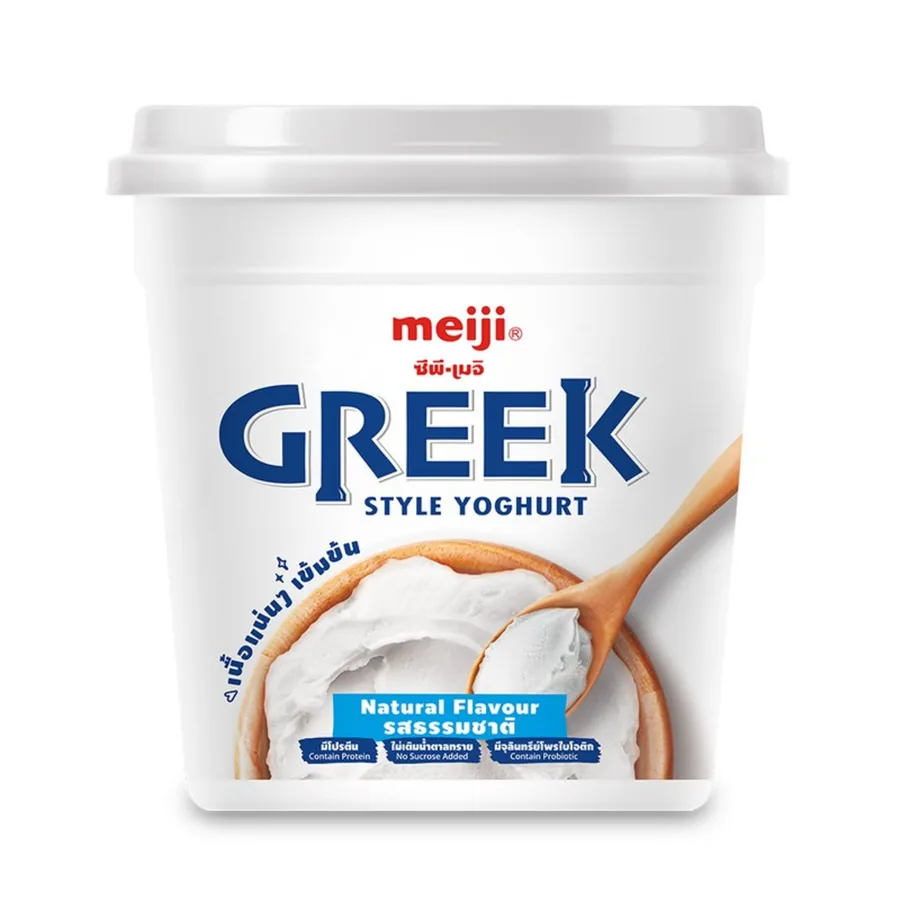
1,000 g · ฿169 · per 150 g: 160 kcal, 7 g protein, 6 g total sugar.
A large no-sucrose-added tub, but not the protein winner: its official panel works out to 4.67 g protein per 100 g. The live price prorates to about ฿25.35 per 150 g, slightly less than the same amount of Dutchie, with 4.5 g less protein.
AllOnline product ID 338392 · SKU 744252010 · official CP-Meiji nutrition panel matched by name and size.
#4 protein · #4 lowest total sugar
Meiji Bulgaria 0% Fat
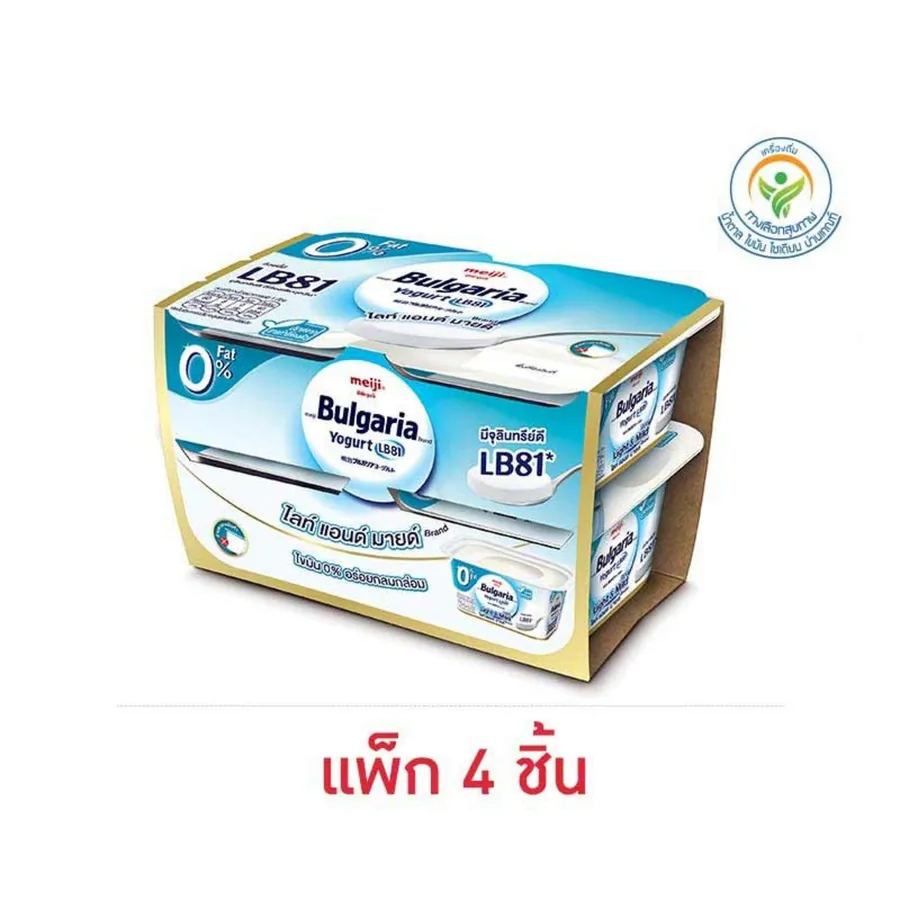
110 g cup · ฿85/four · 45 kcal · 5 g protein · 5 g total sugar.
The lowest-calorie ranked cup and part of the low-sugar cluster. “0%” refers to fat: the official panel still declares 5 g total sugar, illustrating why package claims cannot replace the nutrition table.
AllOnline product ID 521755 · SKU 462268010 · official CP-Meiji nutrition panel.
Tied #5 protein · #1 lowest total sugar
Meiji Bulgaria Natural
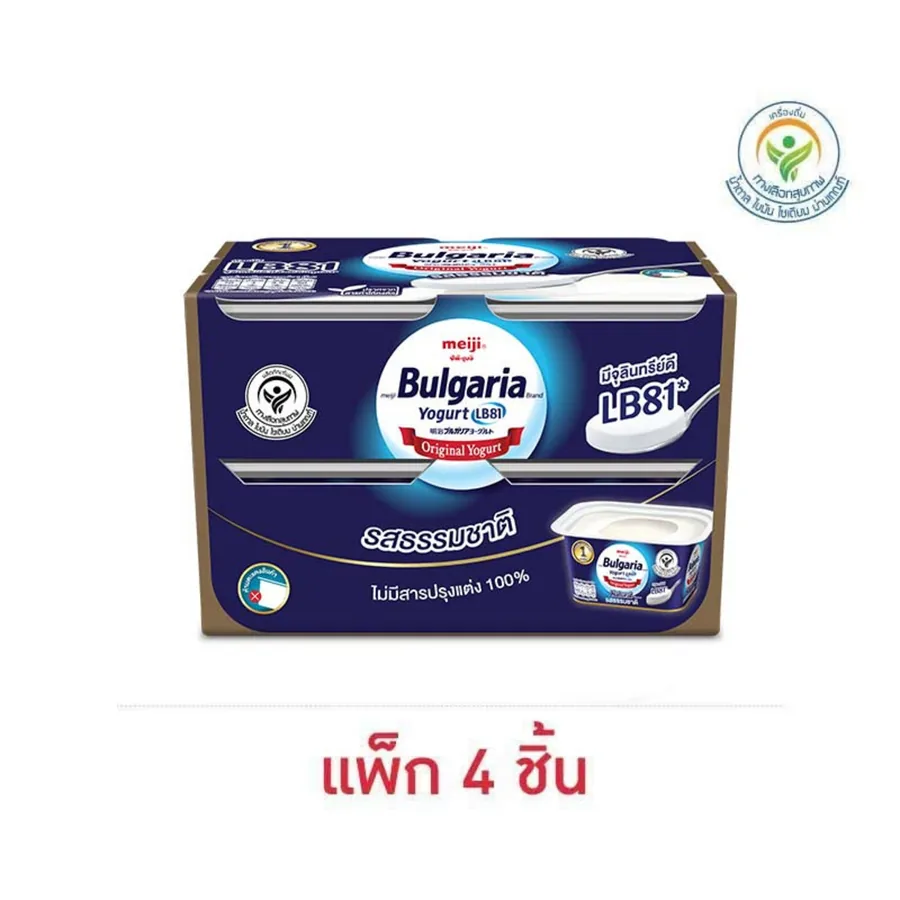
110 g cup · ฿85/four · 60 kcal · 4 g protein · 4 g total sugar.
The total-sugar winner and a simple low-sugar default. Its advantage over the three neighboring low-sugar products is small and label values are rounded, but the gap from the Honey and Mellow cups is large.
AllOnline product ID 537454 · SKU 490819010 · official CP-Meiji nutrition panel.
Tied #5 protein · #6 lowest total sugar
Meiji Bulgaria Golden Honey
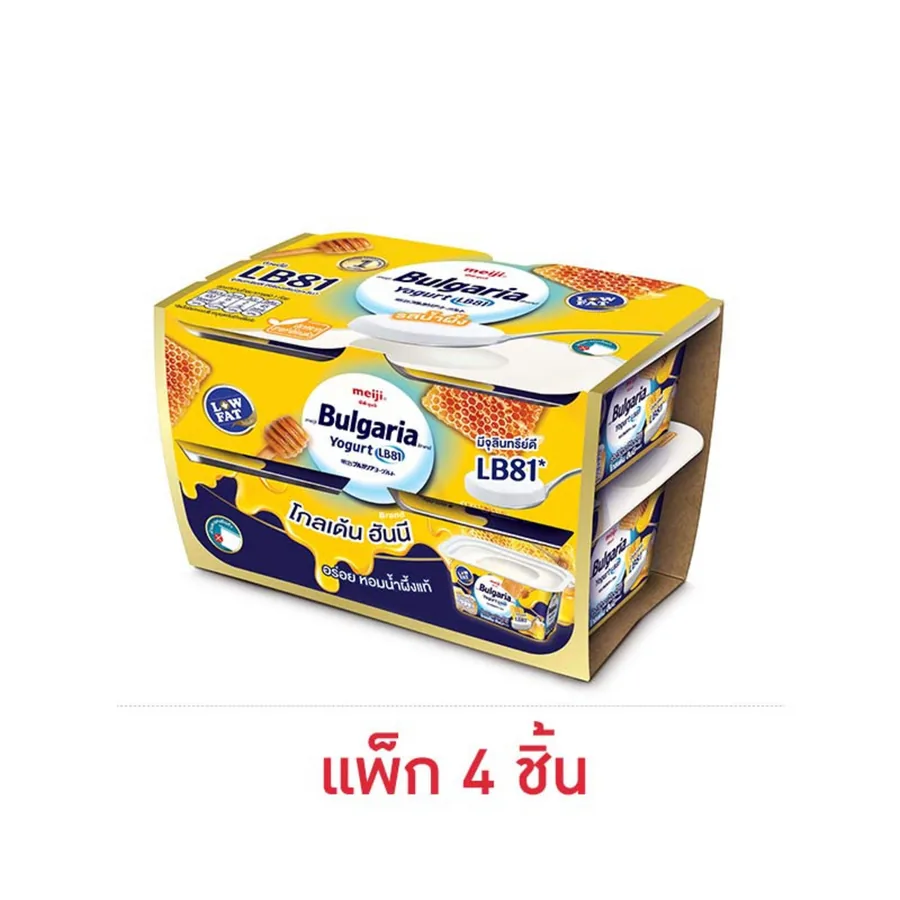
110 g cup · ฿85/four · 100 kcal · 4 g protein · 14 g total sugar.
The protein dose is identical to Natural, but the cup has 10 g more total sugar and 40 more calories. Choose it for flavor preference, not because honey changes the protein case.
AllOnline product ID 537455 · SKU 490820010 · official CP-Meiji nutrition panel.
Tied #5 protein · #7 lowest total sugar
Meiji Bulgaria Mellow
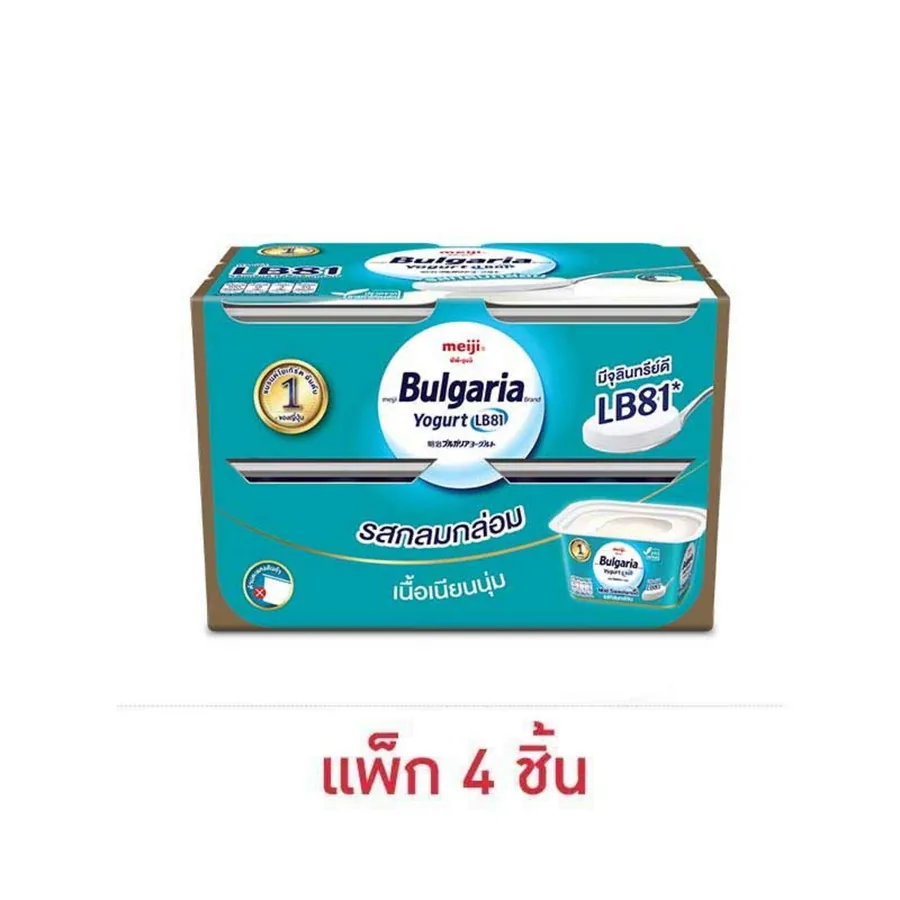
110 g cup · ฿85/four · 100 kcal · 4 g protein · 15 g total sugar.
The highest total sugar in the exact-panel set. It provides the same 4 g protein as Natural and Honey, so it falls to the bottom when controlling sugar is the goal.
AllOnline product ID 521756 · SKU 462269010 · official CP-Meiji nutrition panel.
Five current yogurts we will not pretend to rank
These products were live in the same official snapshot and may be good choices, but the current retailer gallery did not expose a complete exact protein-and-total-sugar pair. Formula-mismatched database entries are not substitutes.
Unranked: incomplete current nutrition pair
Dutchie Probiotic Natural
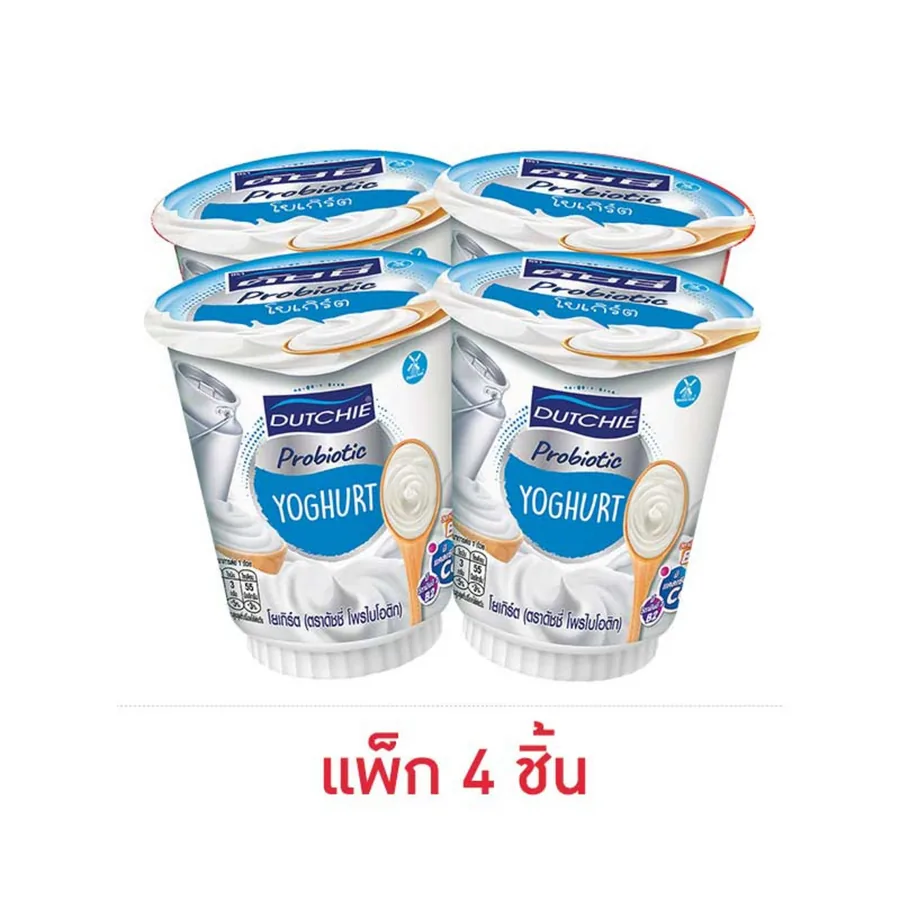
125 g cup · ฿52/four. The live page identifies the formula and ingredients, but the gallery does not show a readable complete protein-and-total-sugar pair. Product ID 564514 · SKU 539077010.
Unranked: incomplete current nutrition pair
Dutchie Bio Duo Probiotic Natural
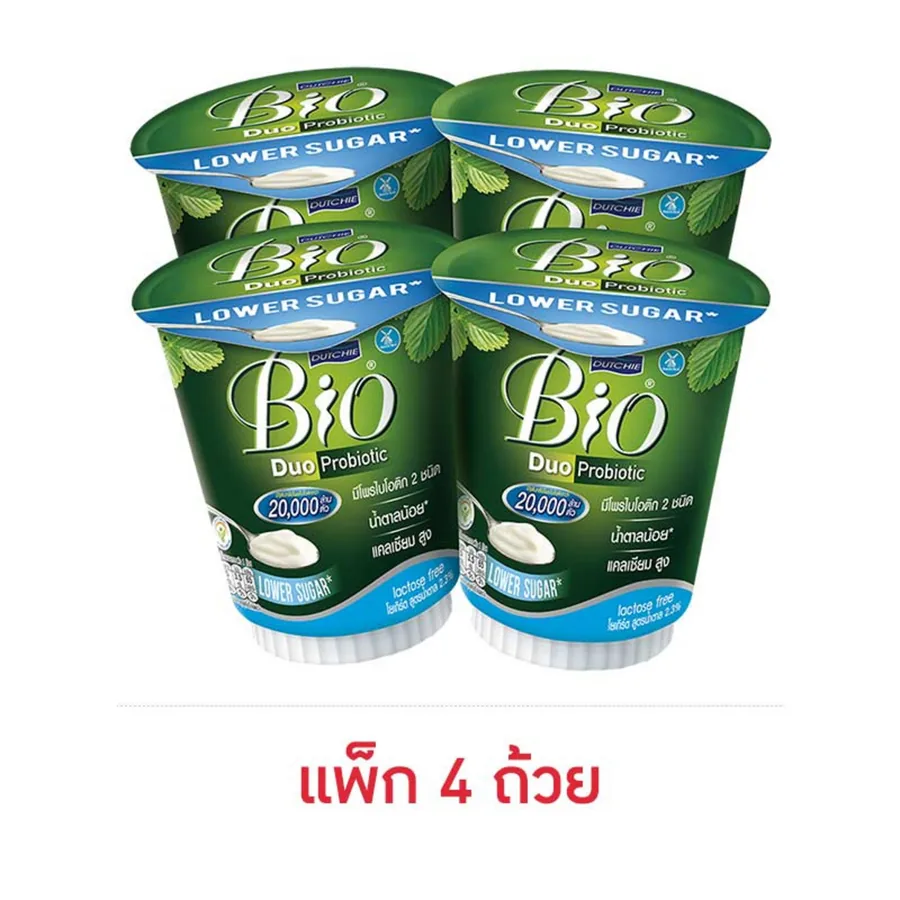
135 g cup · ฿52/four. Lower-sugar and probiotic claims are useful descriptors, not a protein measurement. Older databases show different formulas, so they are not transferred. Product ID 381706 · SKU 696283010.
Unranked: 0% does not supply the missing protein figure
Dutchie 0% Original
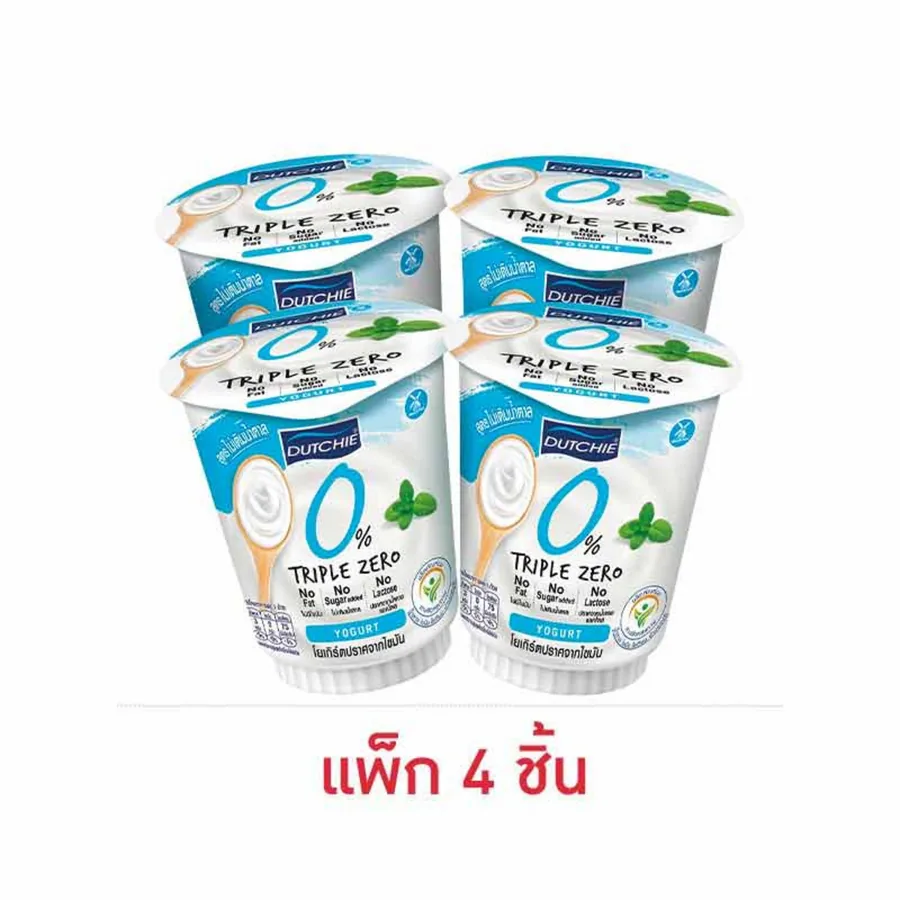
125 g cup · ฿49/four. The current listing says fat-free, no sugar added, and lactose-free, but the exact protein-and-total-sugar pair is not readable in the retailer gallery. Product ID 555139 · SKU 523241010.
Unranked: incomplete current nutrition pair
Richesse Plain
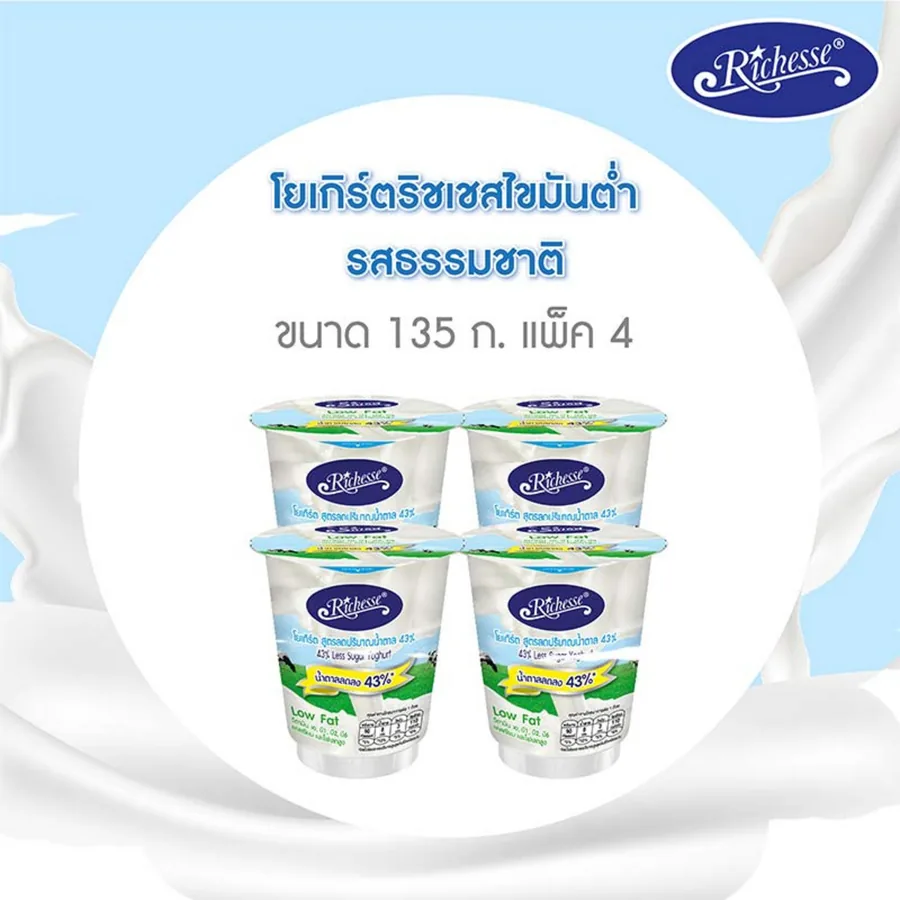
135 g cup · ฿62/four. The exact current listing is documented, but a “43% less sugar” comparison claim cannot be converted into grams without the matching panel. Product ID 560513 · SKU 532163010.
Unranked: plant-based identity is not a nutrition value
Rivon SoyGurt Original
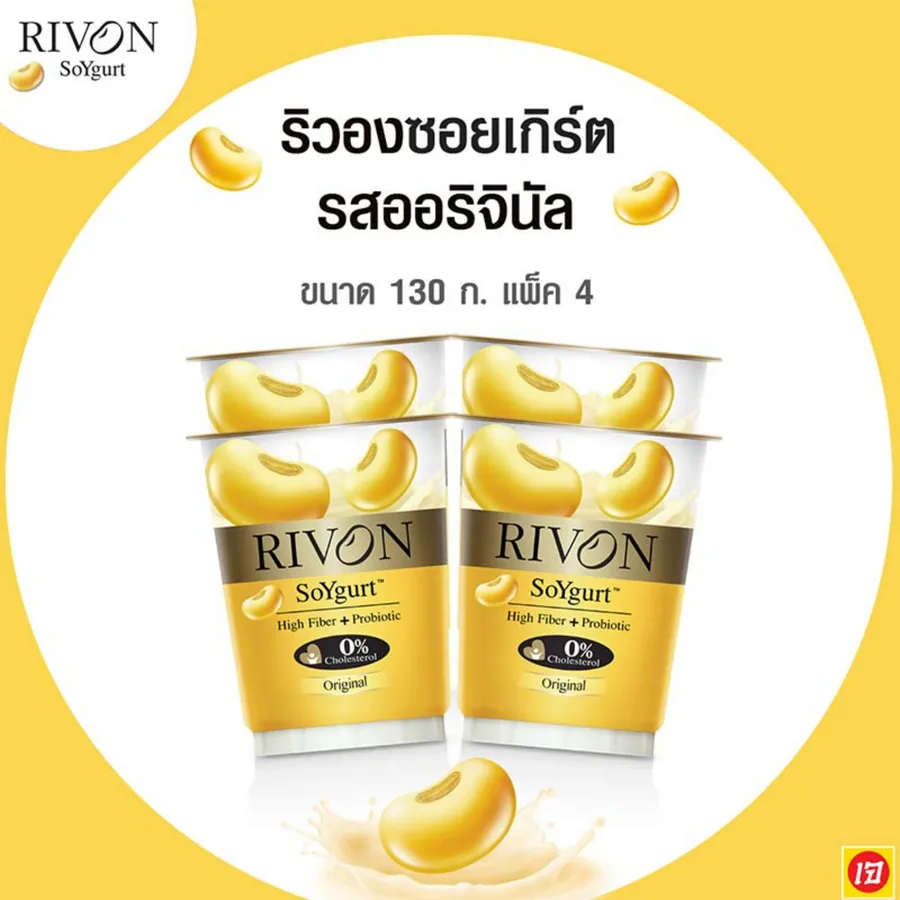
130 g cup · ฿70/four. The current soy option is relevant for shoppers avoiding dairy, but soy branding alone does not disclose the grams needed for either leaderboard. Product ID 566395 · SKU 541663010.
Methodology, limitations, and sources
- Snapshot: AllOnline listings, prices, sizes, product IDs, SKUs, and images checked on 20 August 2026, plus one current Dutchie cup photographed in a 7-Eleven branch that day. Individual branch stock and prices can differ.
- Per 100 g: the main rankings normalize containers of different sizes. They do not tell you how much you personally will eat.
- Total sugar: the Thai panel figure includes naturally occurring milk sugar. We do not relabel it as added or free sugar.
- Label rounding: calculations inherit rounding from the printed serving values. Two decimal places make the arithmetic reproducible, not laboratory-exact.
- Label-only nutrition: no independent laboratory test was commissioned. Manufacturing tolerances apply.
- No taste claims: products were not blind tasted for this comparison.
- Current formula wins: a matching current package or official panel overrides older crowd databases and old reviews.
- Format boundary: drinkable yogurts are excluded from the spoonable ranking because grams and millilitres are not interchangeable without density data.
- Allergens: the ranked products contain milk. Rivon is soy-based, but shoppers with allergies should check the exact current package and facility warnings.
Product and label sources
- AllOnline yogurt-cups catalog snapshot
- AllOnline yogurt search, including Greek-style tubs
- CP-Meiji Greek Style Natural 1 kg official panel
- CP-Meiji Bulgaria Natural 110 g official panel
- CP-Meiji Bulgaria 0% Fat 110 g official panel
- CP-Meiji Bulgaria Golden Honey 110 g official panel
- CP-Meiji Bulgaria Mellow 110 g official panel
- Author-supplied current 7-Eleven branch photographs of the Dutchie Greek Style 2X Protein 120 g front, barcode/package details, and Thai nutrition panel
- Big C listing for Dutchie Greek Style Original 120 g, barcode 8851717907081 (identity and market-price cross-check only)
- Lotus's listing for Dutchie Greek Style Original with granola 120 g (identity and market-price cross-check only)
Research context
- Greek yogurt and 12 weeks of exercise training: randomized intervention in untrained young men
- ISSN position stand: protein and exercise
- WHO guideline: sugars intake for adults and children
Medical disclaimer: this is general educational information, not a personal diet prescription. Allergies, lactose tolerance, medical conditions, medications, pregnancy, energy needs, and training load can change what is appropriate.