Scope and assumptions
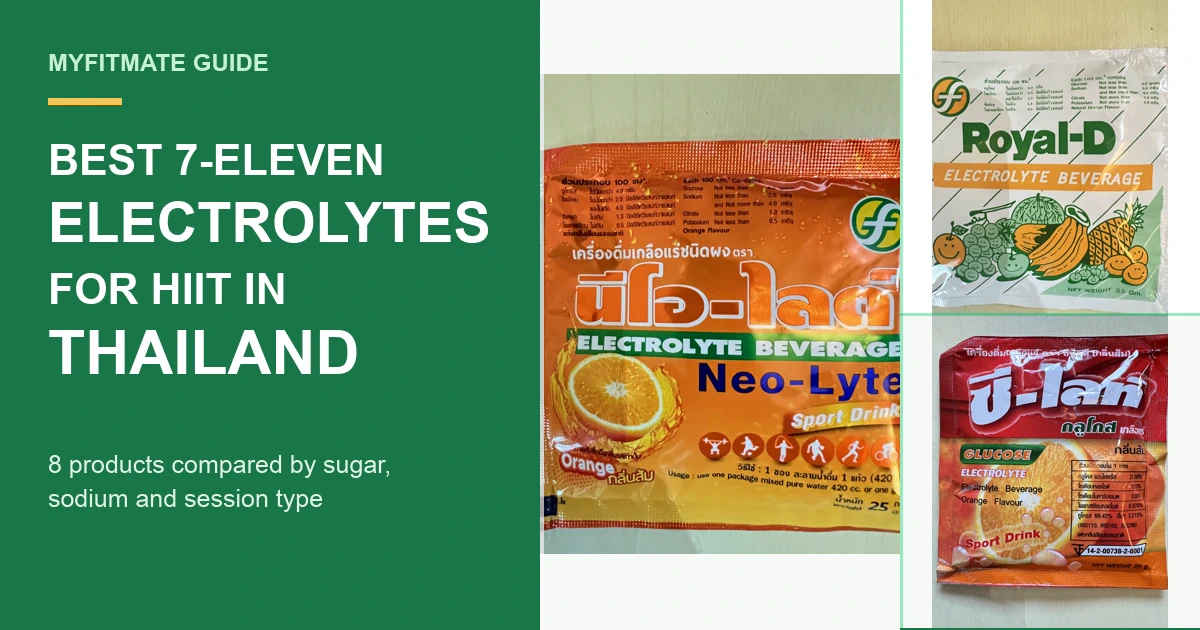
This is a label-only nutritional review of eight electrolyte powders purchased from 7-Eleven in Thailand. Taste and price were not assessed.
A separate section at the end adds Simplify Lemon Lime 1000, SALZ Essentials Active Salt, and WILDER Performance Hydration. They are sold outside 7-Eleven and are not inserted into the original leaderboard.
The main leaderboard assumes:
- 30–60 minutes of HIIT;
- hot, humid Thai conditions;
- hydration matters more than maximizing carbohydrate intake;
- each sachet is mixed with exactly the amount of water stated on its label; and
- the user does not have a medical reason to restrict sodium, sugar, or potassium.
Traditional sports drinks commonly contain about 6–8% carbohydrate and 20–40 mmol sodium per litre, approximately 460–920 mg/L. Carbohydrate is generally unnecessary for exercise under 45 minutes, while small amounts can become useful during sustained high-intensity exercise lasting approximately 45–75 minutes.
How exact are the label figures?
Carbohydrate disclosure is not equally precise across the products:
- Royal-D 25 g guarantees glucose of “not less than 2 g per 100 mL” of prepared drink, equivalent to at least 8 g per 400 mL serving. It separately declares 50% sucrose, or 12.5 g per 25 g sachet. Total sugar is therefore at least 20.5 g, but exact glucose, exact total sugar, and exact calories are not disclosed.
- Newtower guarantees only at least 5 g dextrose per 250 mL serving and does not disclose total sugar, calories, or a complete carbohydrate breakdown. It is less transparent than Royal-D 25 g.
- StronK-K, both Sea-Lyte flavours, Neo-Lyte 25 g, and Royal-D 20 g provide ingredient percentages and/or nutrition-panel values sufficient for nominal carbohydrate calculations.
- SEA ORS-HR declares exact medicinal ingredient weights.
“Not less than,” “not more than,” and range values are regulatory guarantees, not exact batch measurements. Calculated figures in this review should therefore be read as label-based estimates, not laboratory results.
Final leaderboard
Among the eight 7-Eleven products, no confirmed sports product is genuinely low in sugar. Products with complete labels provide approximately 18.7–23.8 g sugar per prepared sachet.
| Rank | Product | Prepared volume | Sugar | Sodium / serving | Sodium / litre | Main verdict |
|---|---|---|---|---|---|---|
| 1 | Neo-Lyte 25 g | 420 mL | 23.6 g | ~196–205 mg | ~467–487 mg/L | Best hydration-first balance |
| 2 | Royal-D 25 g | 400 mL | At least 20.5 g | ~187–195 mg | ~466–487 mg/L | Very similar; glucose is declared only as a minimum |
| 3= | Sea-Lyte orange | 250 mL | 18.70 g | ~211 mg | ~846 mg/L | Best for longer or heavier sweating |
| 3= | Sea-Lyte lemon | 250 mL | 18.65 g | ~211 mg | ~846 mg/L | Nutritionally equivalent to orange |
| 5 | Royal-D 20 g | 320 mL | 19 g | 140 mg | ~438 mg/L | Balanced, but slightly sodium-light |
| 6 | Newtower | 250 mL | Not disclosed | 115–230 mg | 460–920 mg/L | Potentially suitable, but poorly disclosed |
| 7 | StronK-K | 250 mL | 23.75 g | ~187 mg | ~747 mg/L | Excessively concentrated at 9.5% carbohydrate |
| 8 | SEA ORS-HR | 250 mL | 3.375 g | ~426 mg | ~1,703 mg/L | Medical ORS; selective post-workout use |
The two Sea-Lyte flavours are tied because their formulas are functionally identical. SEA ORS-HR is shown for completeness but belongs in a separate medical-use category.
Category winners
Moderate sodium, 5.6% carbohydrate, and 420 mL prepared volume.
Higher sodium and a conventional 7.5% sports-drink concentration.
Approximately 5–6% carbohydrate with moderate sodium.
Full nutrition panel plus detailed ingredients.
18.65 g, only trivially below the orange version.
23.75 g sugar in only 250 mL water.
High sodium can improve fluid retention, but this is not complete recovery nutrition.
What to use by session
Under 45 minutes
Water is often enough
If training begins in a hydrated state, water will often be sufficient. If heat and sweating justify an electrolyte drink, Neo-Lyte 25 g or Royal-D 25 g offers the most hydration-focused balance in this set.
45–75 minutes
Choose Sea-Lyte
Sea-Lyte is the strongest match because its carbohydrate and sodium concentrations sit within conventional sports-drink ranges.
Very heavy or visibly salty sweating
Sea-Lyte has more sodium
It provides considerably more sodium per litre than either Royal-D sports product or Neo-Lyte 25 g. Individual sweat losses vary substantially.
After a large measured sweat loss
SEA ORS-HR can be targeted
One 250 mL serving can be part of post-workout recovery when there is a meaningful fluid deficit or rapid rehydration is needed. It is not the routine choice during ordinary 30–60-minute HIIT.
Diarrhoea or vomiting
SEA ORS-HR is medical ORS
Mix it exactly as directed for its primary labelled purpose: illness-related fluid loss.
Using ORS after substantial sweat loss
Estimate the deficit by weighing under similar conditions before and after training: approximately 1 kg of net body-mass loss corresponds to about 1 L of fluid deficit, after accounting for drinks consumed and urine produced. When rapid recovery is needed within roughly four hours, total fluid across recovery may be about 125–150% of the estimated deficit, consumed gradually because some fluid will be lost in urine.
For example, a 1 kg net loss may call for roughly 1.25–1.5 L across the recovery period. One 250 mL ORS serving is only one part of that total, alongside water and food. Do not force fluid beyond losses or drink the entire replacement volume at once; if body mass barely changed, thirst is modest, and a normal meal follows, ORS is usually unnecessary.
Water plus normal meals should remain the everyday base. A targeted serving after the heaviest sweating period can be reasonable, but repeated routine use is better guided by measured sweat losses, blood pressure, and medical factors.
Repeated cramping, dizziness, or heat intolerance should not be managed simply by escalating electrolyte intake. Stop training, cool down, and seek medical advice when symptoms are severe or persistent.
Normalized comparison
Packet size alone is misleading. Comparing each drink at its labelled dilution shows how concentrated it will actually be.
| Product | Carbohydrate concentration | Sodium / litre | Confirmed sugar / sachet | Best match |
|---|---|---|---|---|
| Neo-Lyte 25 g | ~5.6% | ~467–487 mg/L | 23.60 g | Typical hot-weather HIIT |
| Royal-D 25 g | At least ~5.1%; probably 5–6% | ~466–487 mg/L | At least 20.5 g | 7-Eleven hydration alternative |
| Sea-Lyte orange | ~7.5% | ~846 mg/L | 18.70 g | Longer or very sweaty sessions |
| Sea-Lyte lemon | ~7.5% | ~846 mg/L | 18.65 g | Longer or very sweaty sessions |
| Royal-D 20 g | ~5.9% | ~438 mg/L | 19 g | Shorter or moderately sweaty HIIT |
| Newtower | Not disclosed | 460–920 mg/L | Not disclosed | Uncertain because the label gives broad ranges |
| StronK-K | ~9.5% | ~747 mg/L | 23.75 g | Long exercise when carbohydrate is deliberately wanted |
| SEA ORS-HR | 1.35% | ~1,703 mg/L | 3.375 g | Illness; selective post-heavy-sweat rehydration |
Individual product reviews
Tap any front or back label to open the large, optimized photograph.
Product 1 · Leaderboard #7
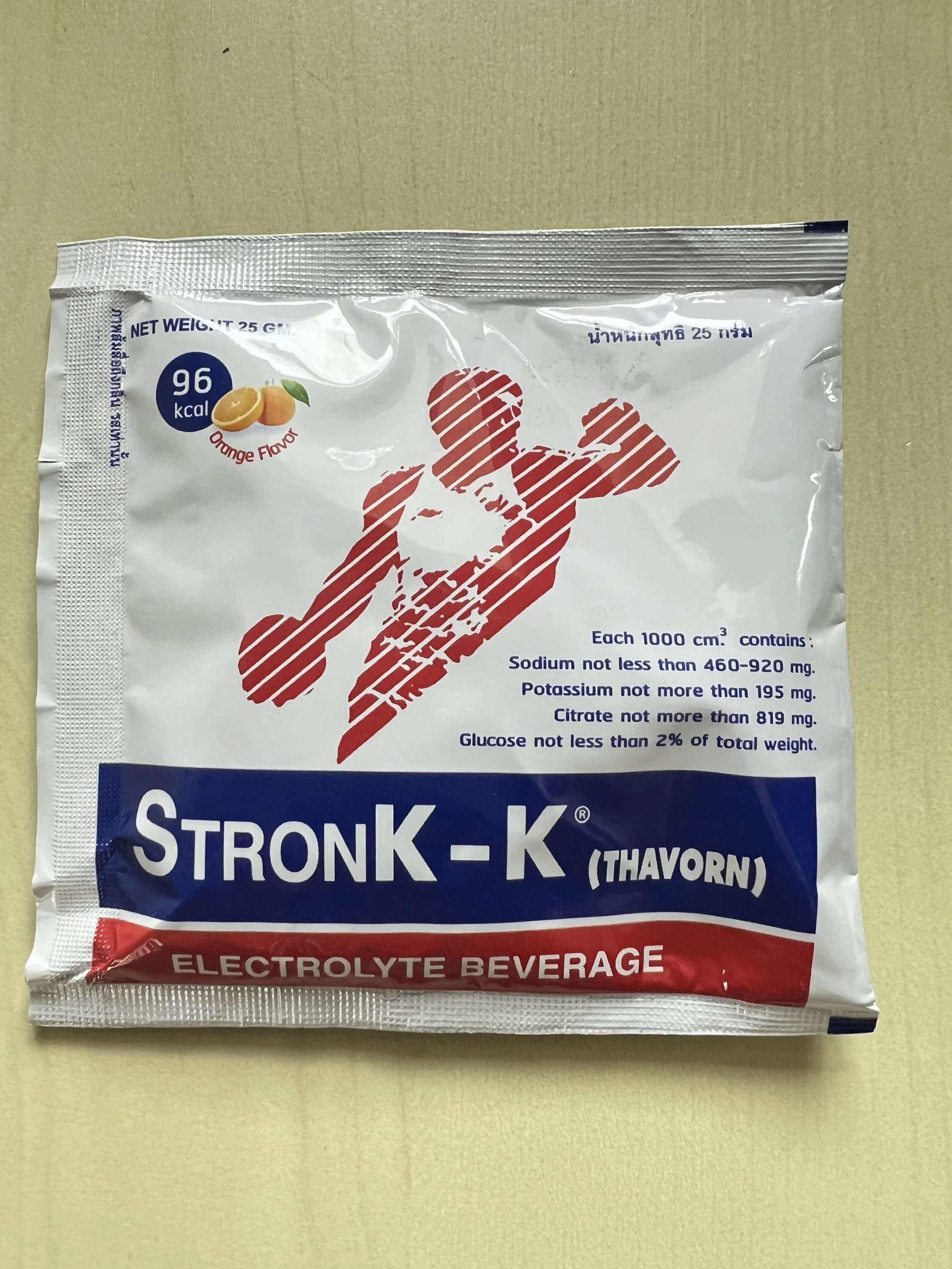
StronK-K (Thavorn), orange
 Open front label
View back label
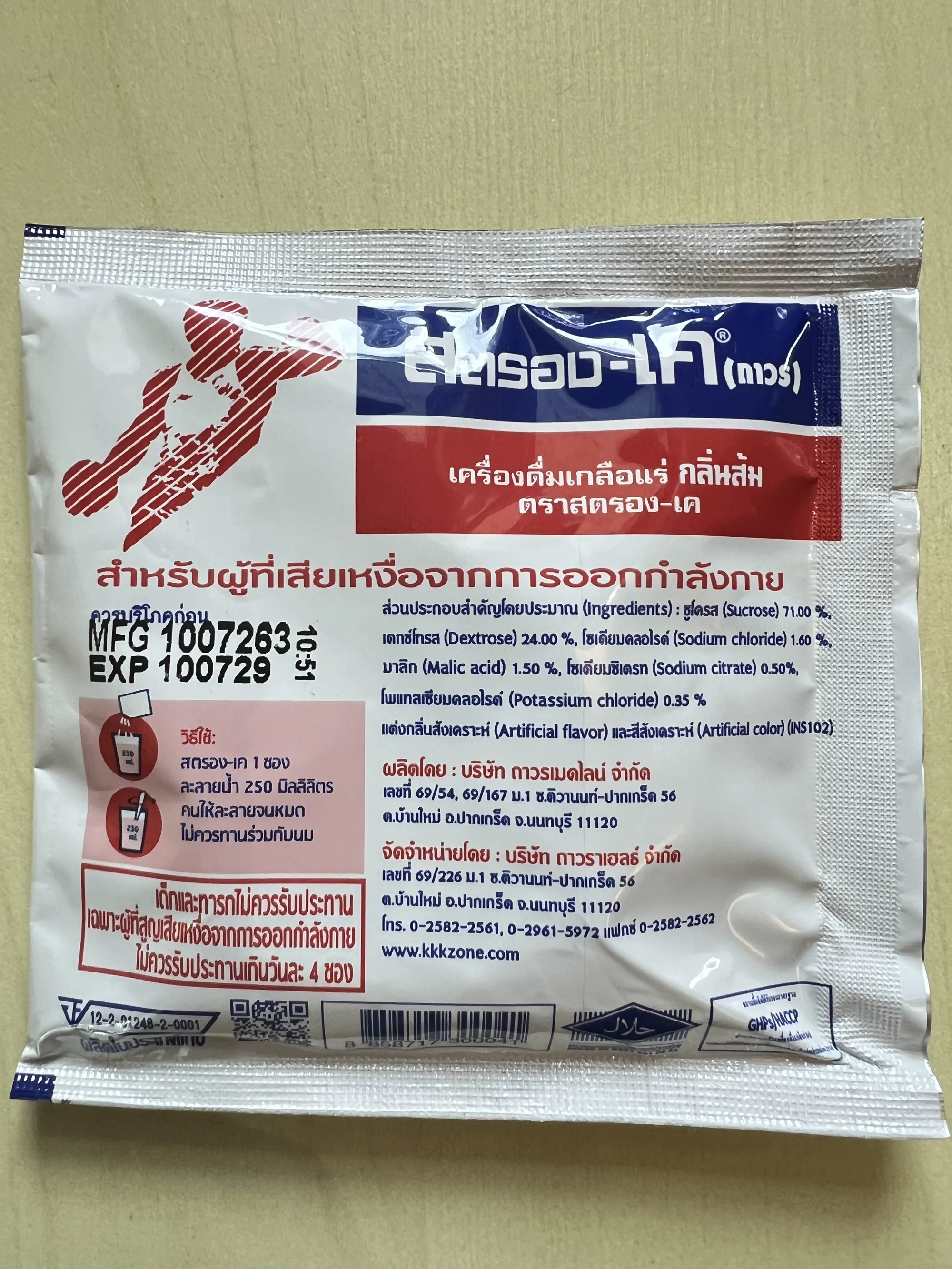
Preparation: One 25 g sachet in 250 mL water.
| Calories | 96 kcal |
|---|---|
| Sucrose | 17.75 g |
| Dextrose | 6.00 g |
| Total sugar | 23.75 g |
| Sodium | ~187 mg; ~747 mg/L |
| Potassium | ~46 mg |
| Carbohydrate concentration | ~9.5% |
Declared formulation: 71% sucrose, 24% dextrose, 1.6% sodium chloride, 1.5% malic acid, 0.5% sodium citrate, and 0.35% potassium chloride. It also contains artificial orange flavour and INS 102 (tartrazine) colouring.
Assessment: The sodium concentration is useful, but the drink is overly concentrated for hydration-focused HIIT. Nearly the entire sachet is sugar, and its 9.5% carbohydrate concentration is higher than the conventional 6–8% sports-drink range.
Best use: Longer exercise where carbohydrate energy is deliberately wanted.
Main weakness: Too much sugar in too little water for routine short HIIT.
Product 2 · Leaderboard #6
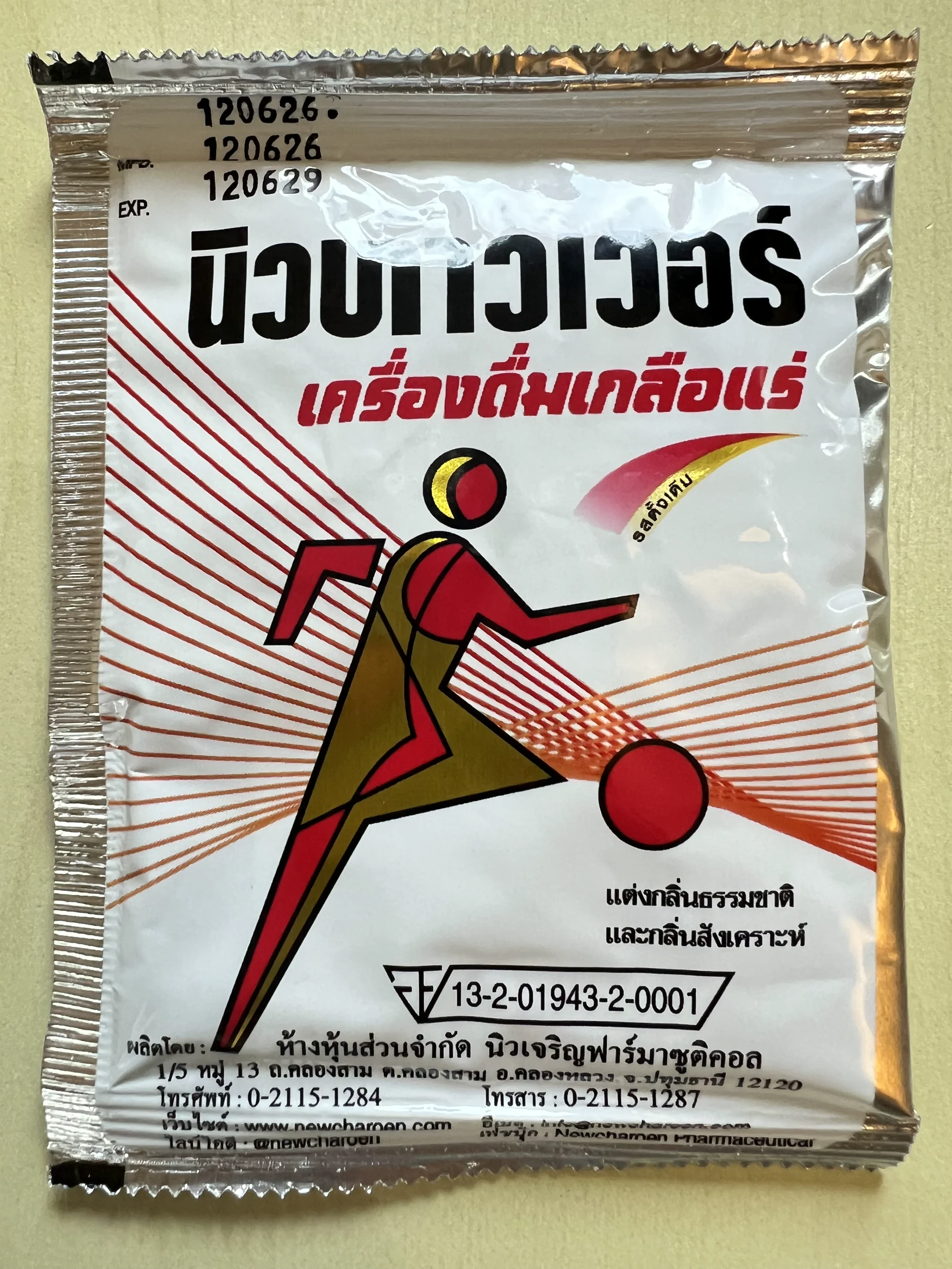
Newtower Electrolyte Beverage
 Open front label
View back label
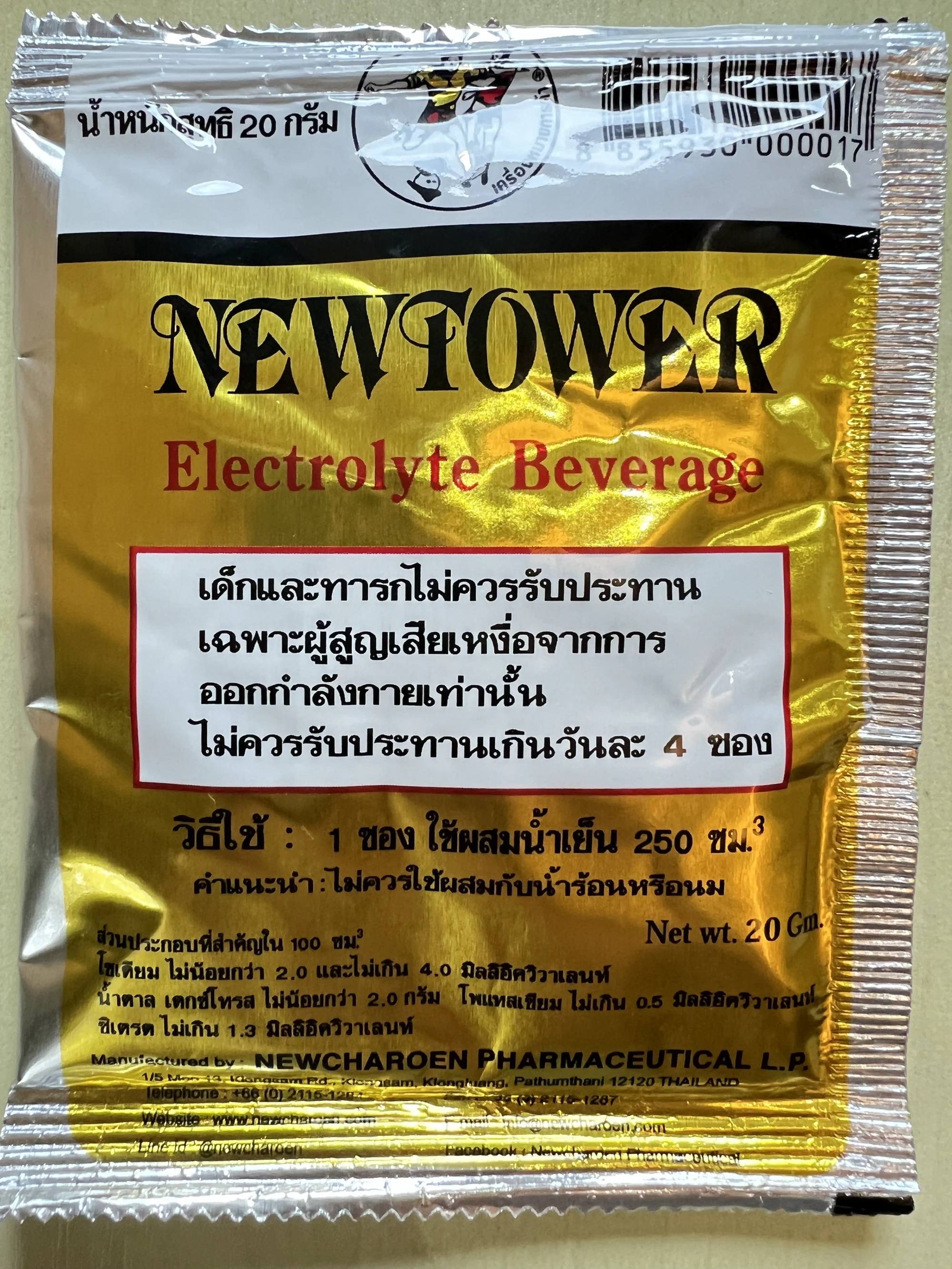
Preparation: One 20 g sachet in 250 mL cold water.
| Dextrose | At least 5 g |
|---|---|
| Total sugar | Not disclosed |
| Calories | Not disclosed |
| Sodium | 115–230 mg; 460–920 mg/L |
| Potassium | No more than ~49 mg |
Declared formulation: The label guarantees at least 2 g dextrose per 100 mL, 2–4 mEq sodium per 100 mL, no more than 0.5 mEq potassium per 100 mL, and no more than 1.3 mEq citrate per 100 mL. Natural and artificial flavouring are mentioned.
Assessment: The declared sodium range could be appropriate for a sports drink, but the maximum is twice the minimum. Total sugar, calories, and a complete carbohydrate breakdown are not provided.
Best use: Potentially sweaty HIIT, if its actual composition is near the middle of the declared range.
Main weakness: Insufficient label transparency prevents a confident recommendation.
Product 3 · Tied leaderboard #3
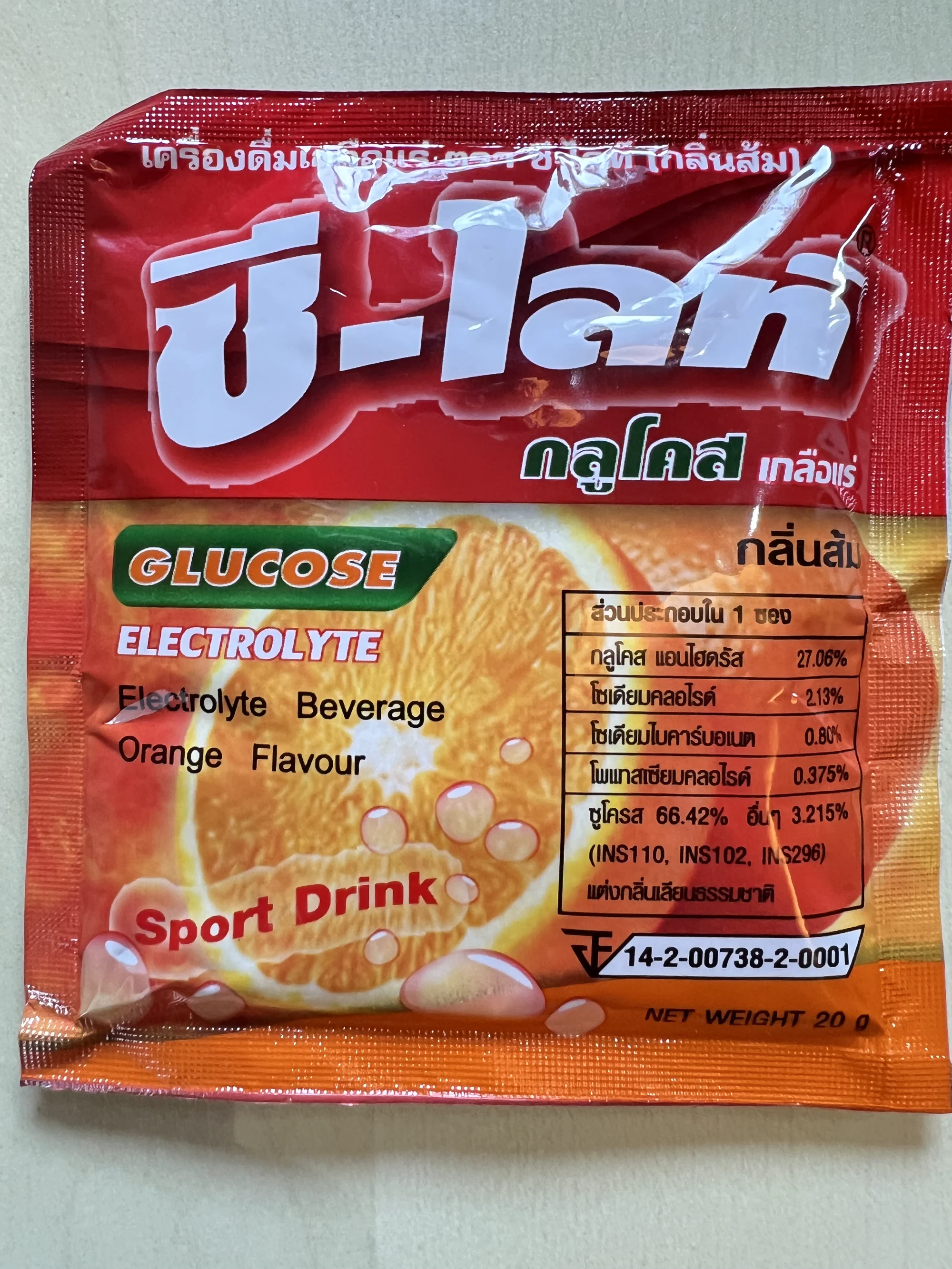
Sea-Lyte, orange
 Open front label
View back label
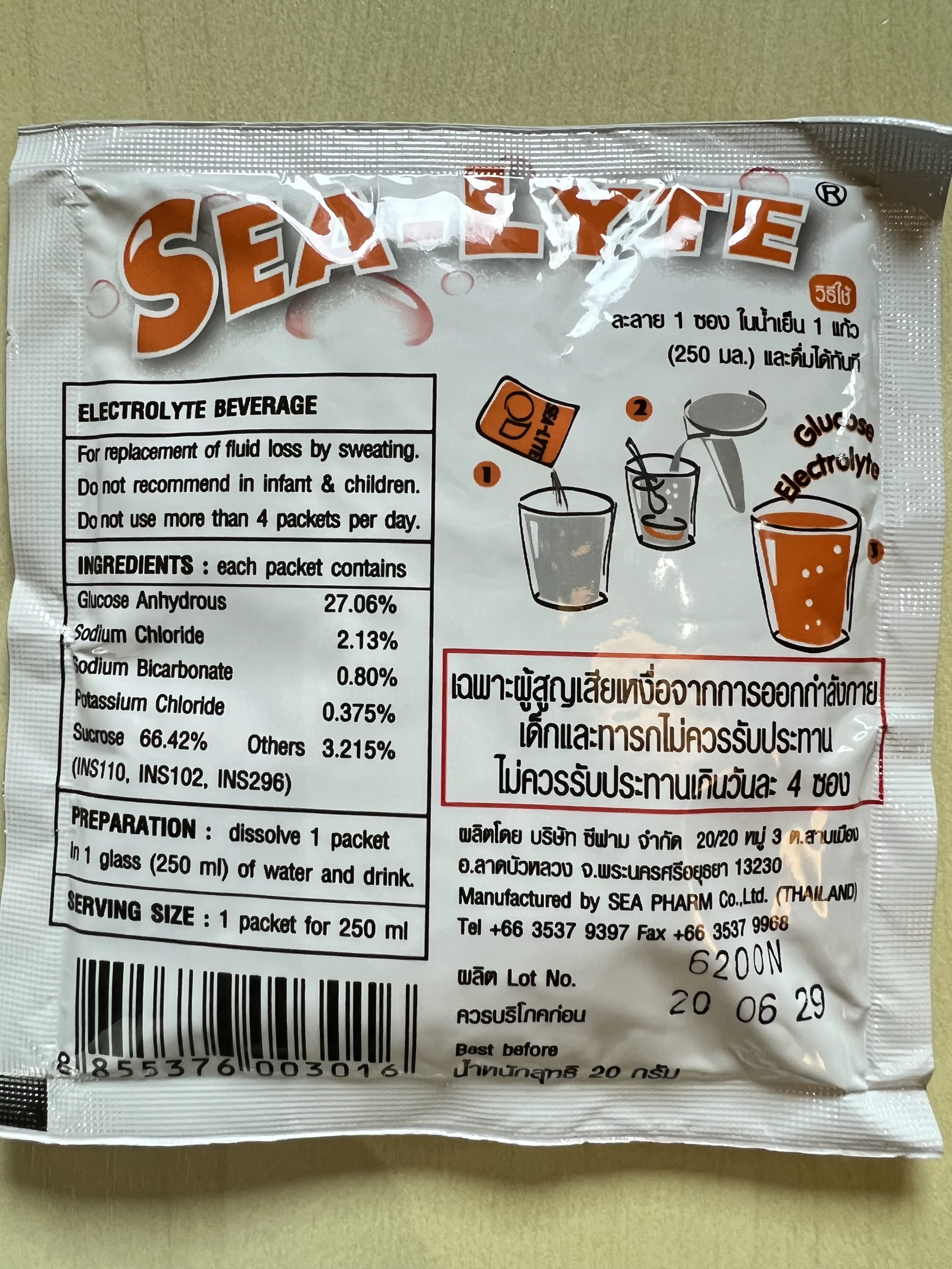
Preparation: One 20 g sachet in 250 mL water.
| Calories | ~75 kcal |
|---|---|
| Sucrose / glucose | 13.28 g / 5.41 g |
| Total sugar | 18.70 g |
| Sodium | ~211 mg; ~846 mg/L |
| Potassium | ~39 mg |
| Carbohydrate concentration | ~7.5% |
Declared formulation: 27.06% glucose anhydrous, 66.42% sucrose, 2.13% sodium chloride, 0.8% sodium bicarbonate, and 0.375% potassium chloride. Other ingredients include malic acid (INS 296), tartrazine (INS 102), Sunset Yellow (INS 110), and flavouring.
Assessment: This is a conventional sports-drink formula with carbohydrate and sodium both within typical sports-drink ranges. It is the strongest option for longer, outdoor, or especially sweaty HIIT.
Best use: Approximately 45–75 minutes of hard training or unusually heavy sweating.
Main weakness: More concentrated than necessary for most short sessions; the artificial colours add no hydration benefit.
Product 4 · Tied leaderboard #3
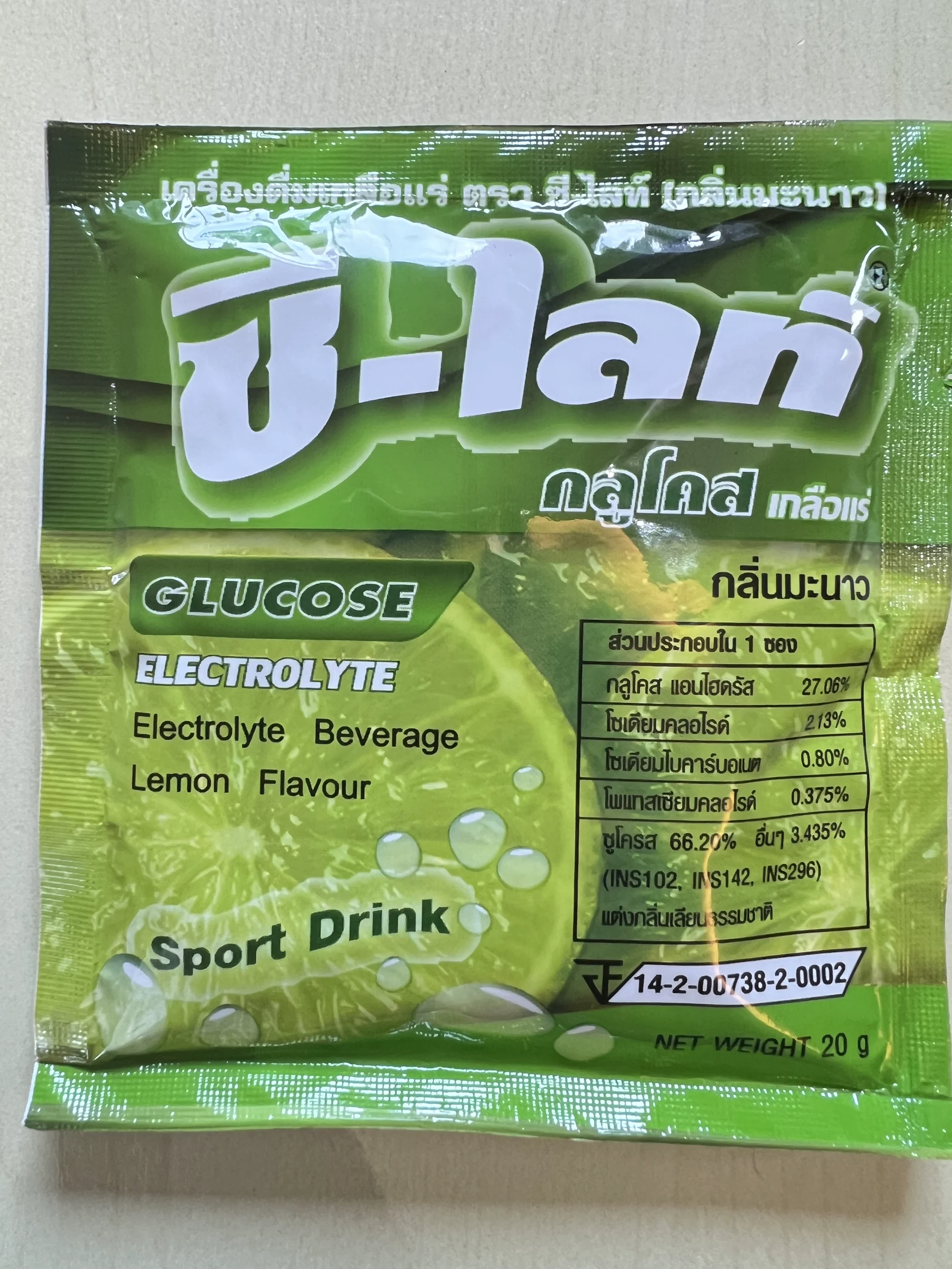
Sea-Lyte, lemon
 Open front label
View back label
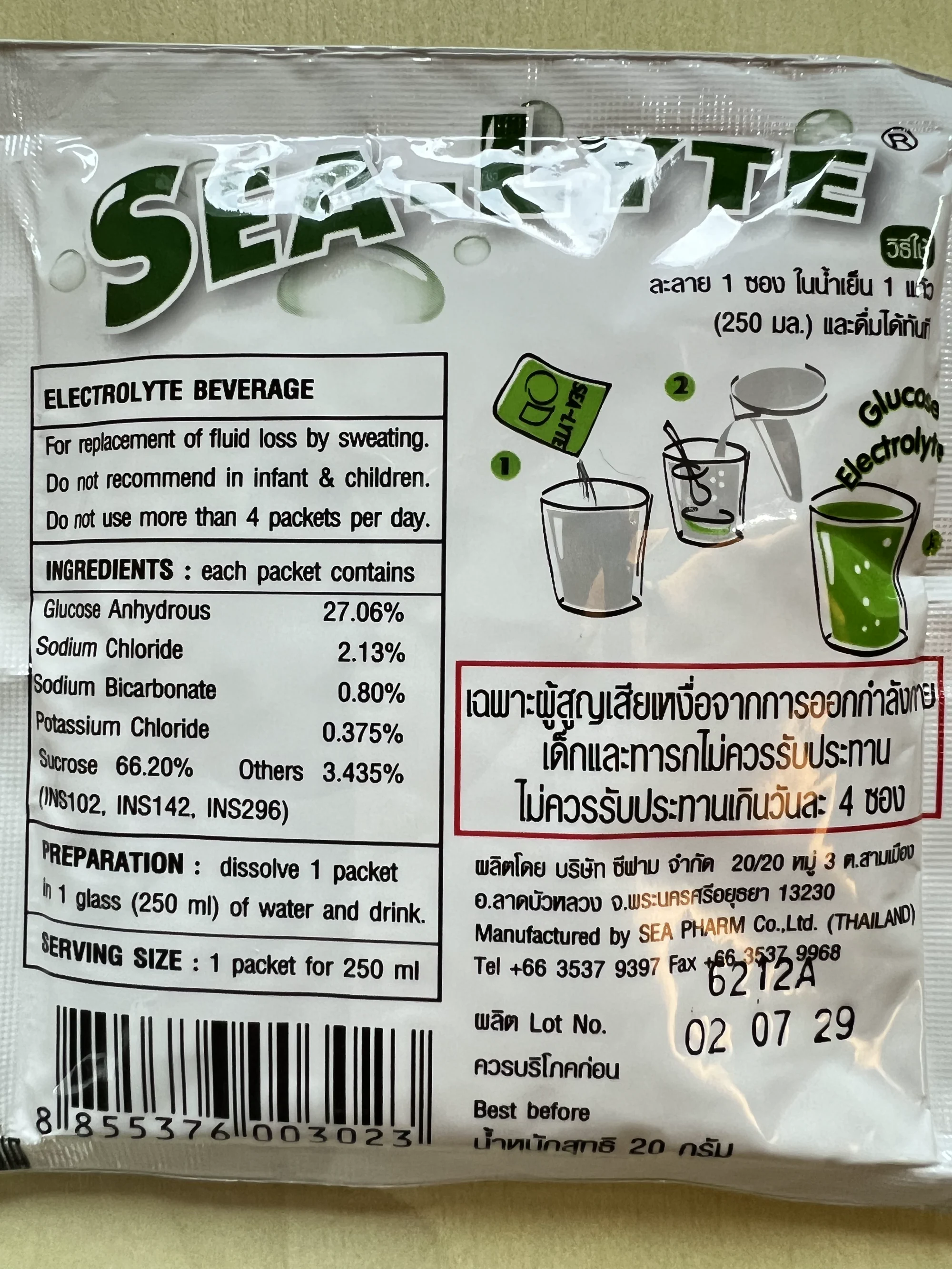
Preparation: One 20 g sachet in 250 mL water.
| Calories | ~75 kcal |
|---|---|
| Sucrose / glucose | 13.24 g / 5.41 g |
| Total sugar | 18.65 g |
| Sodium | ~211 mg; ~846 mg/L |
| Potassium | ~39 mg |
| Carbohydrate concentration | ~7.5% |
Declared formulation: The electrolyte formula matches the orange version. It contains malic acid (INS 296), tartrazine (INS 102), Green S (INS 142), and flavouring.
Assessment: Nutritionally equivalent to Sea-Lyte orange. The 0.05 g sugar difference is meaningless in practice.
Best use: Approximately 45–75 minutes of hard training or unusually heavy sweating.
Main weakness: The same as the orange version: unnecessary for many short sessions and contains artificial colouring.
Product 5 · Leaderboard #2
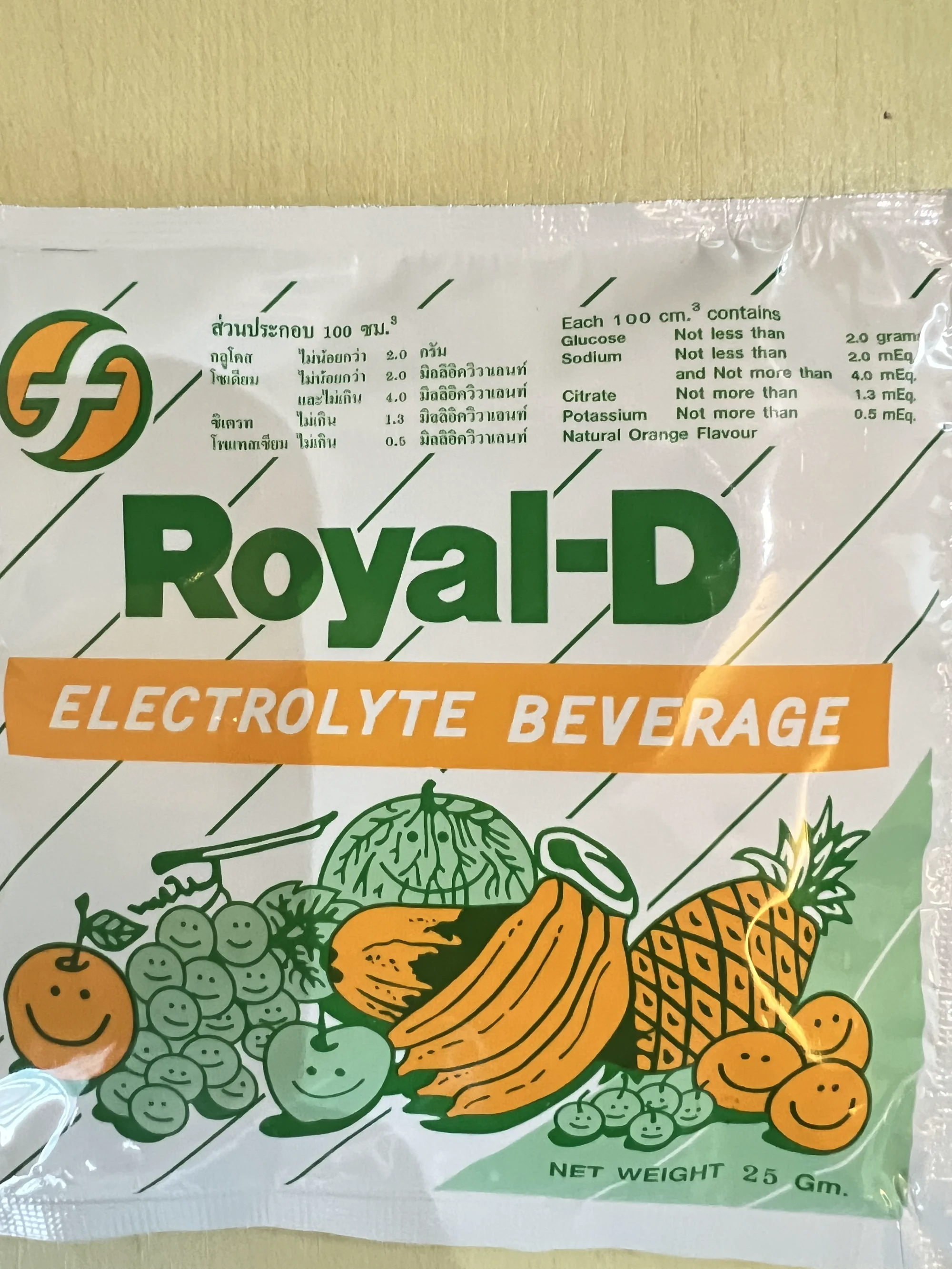
Royal-D 25 g
 Open front label
View back label
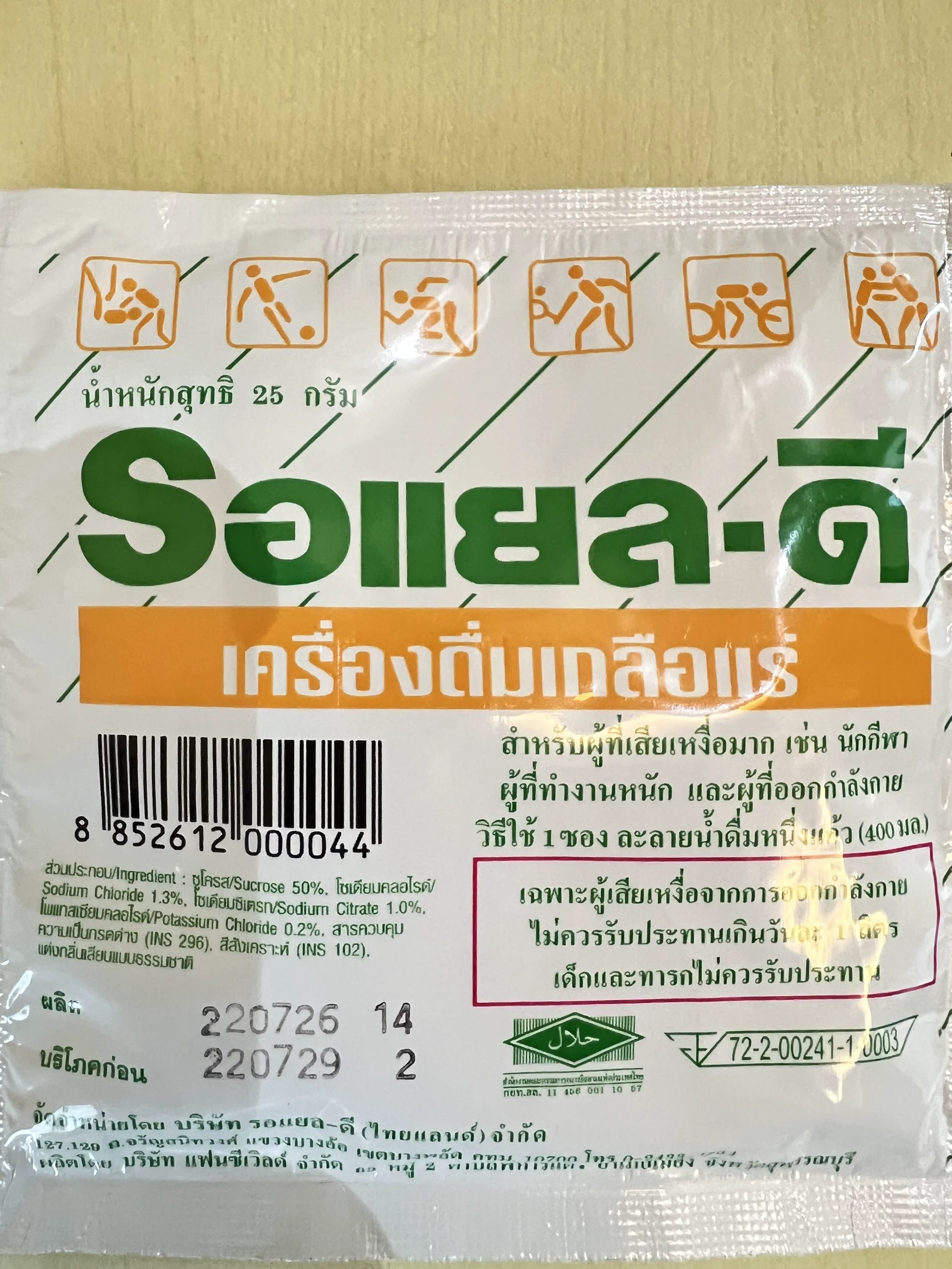
Preparation: One 25 g sachet in 400 mL water.
| Sucrose / glucose | 12.5 g / at least 8 g |
|---|---|
| Total sugar | At least 20.5 g |
| Estimated calories | At least ~82 kcal |
| Sodium | ~187–195 mg; ~466–487 mg/L |
| Potassium | ~26 mg |
| Carbohydrate concentration | At least ~5.1%; probably 5–6% |
Declared formulation: 50% sucrose, or 12.5 g per 25 g sachet, plus 1.3% sodium chloride, 1% sodium citrate, 0.2% potassium chloride, malic acid (INS 296), tartrazine (INS 102), and flavouring. The prepared-drink specification declares glucose only as a minimum of “not less than 2 g per 100 mL,” equivalent to at least 8 g per 400 mL serving and at least 20.5 g total sugar.
Assessment: A good hydration-focused formula with substantially more prepared fluid than the 250 mL products. Its moderate sodium and likely 5–6% carbohydrate concentration suit hot-weather HIIT well.
Best use: Shorter or medium-length HIIT when fluid replacement is more important than concentrated fuel.
Main weakness: Glucose is declared only as a minimum, so exact glucose, total sugar, and calories cannot be calculated.
Product 6 · Overall winner
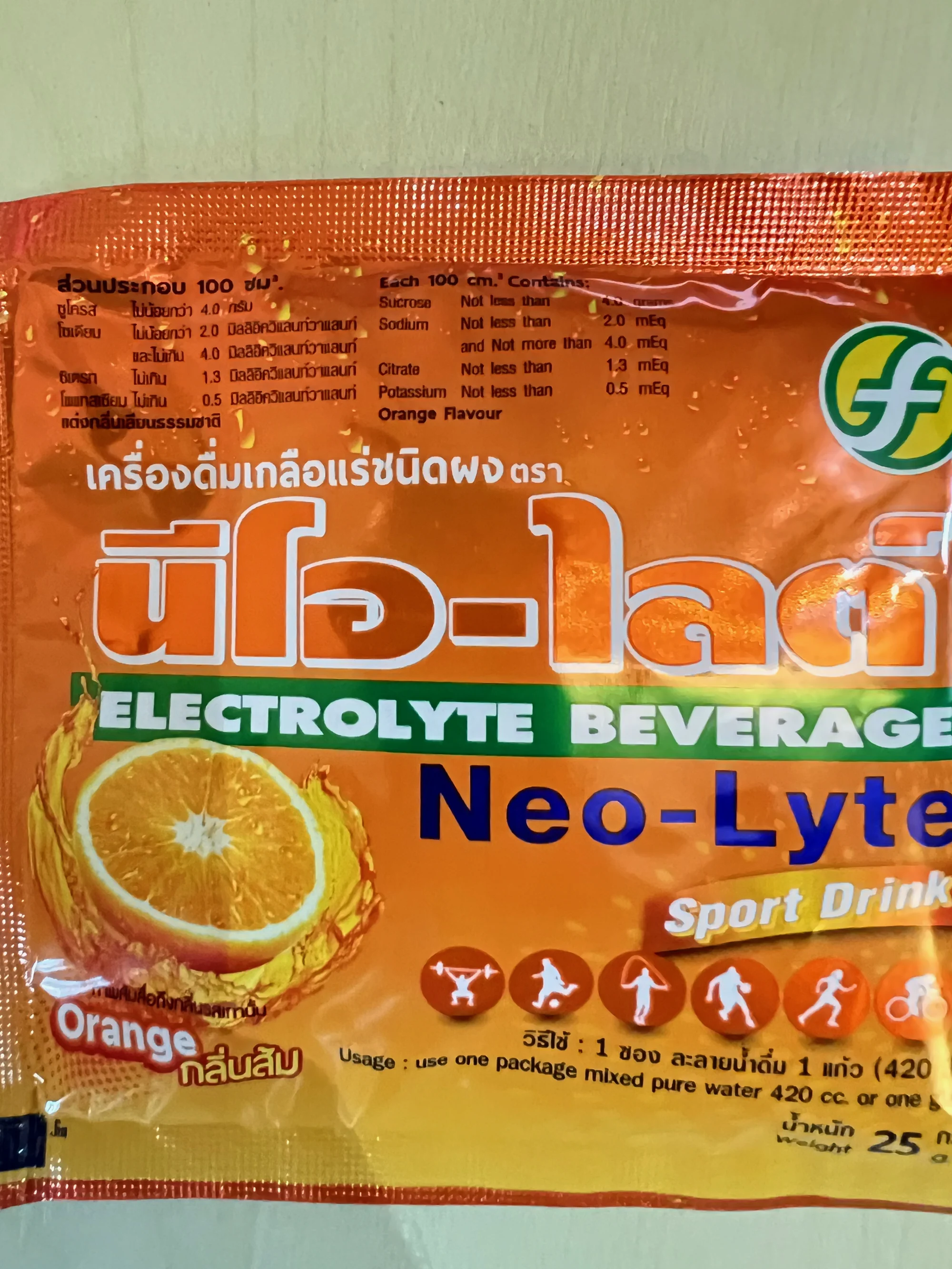
Neo-Lyte, 25 g
 Open front label
View back label
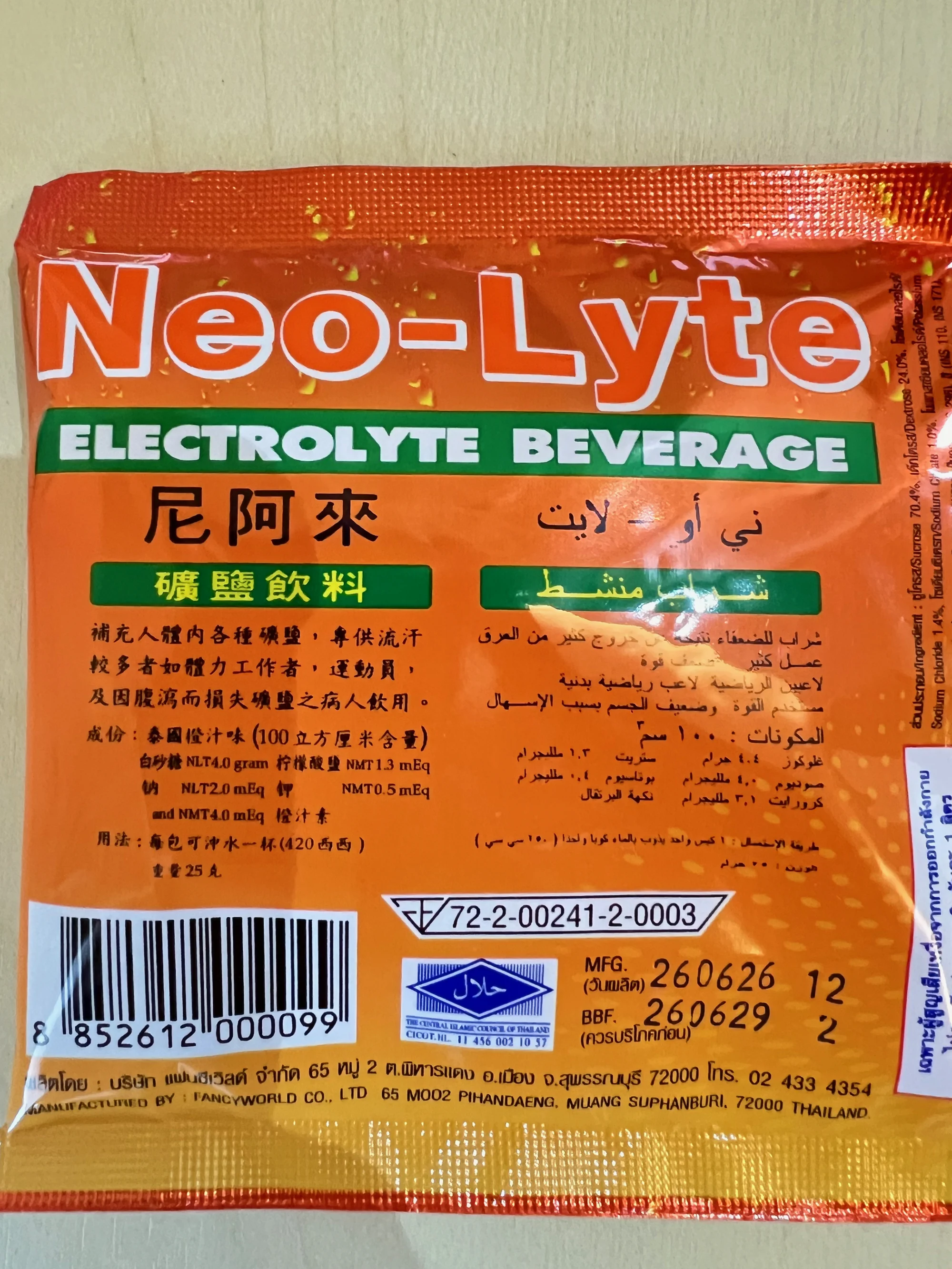
Preparation: One 25 g sachet in 420 mL water.
| Calories | ~94 kcal |
|---|---|
| Sucrose / dextrose | 17.60 g / 6.00 g |
| Total sugar | 23.60 g |
| Sodium | ~196–205 mg; ~467–487 mg/L |
| Potassium | ~26 mg |
| Carbohydrate concentration | ~5.6% |
Declared formulation: 70.4% sucrose, 24% dextrose, 1.4% sodium chloride, 1% sodium citrate, and 0.2% potassium chloride, plus acidity regulators, colouring, anticaking/antioxidant ingredients, and flavouring.
Assessment: The best overall balance for the assumed use case. It combines a hydration-focused carbohydrate concentration, moderate sodium, and the largest prepared volume among the sports products reviewed.
Best use: Typical 30–60-minute HIIT in hot, humid conditions.
Main weakness: It still supplies 23.6 g added sugar, and the English label reverses “maximum” into “minimum” for citrate and potassium. The Thai specification was used for this review.
Product 7 · Medical ORS with selective post-workout use
SEA ORS-HR, orange
 Open front label
View back label
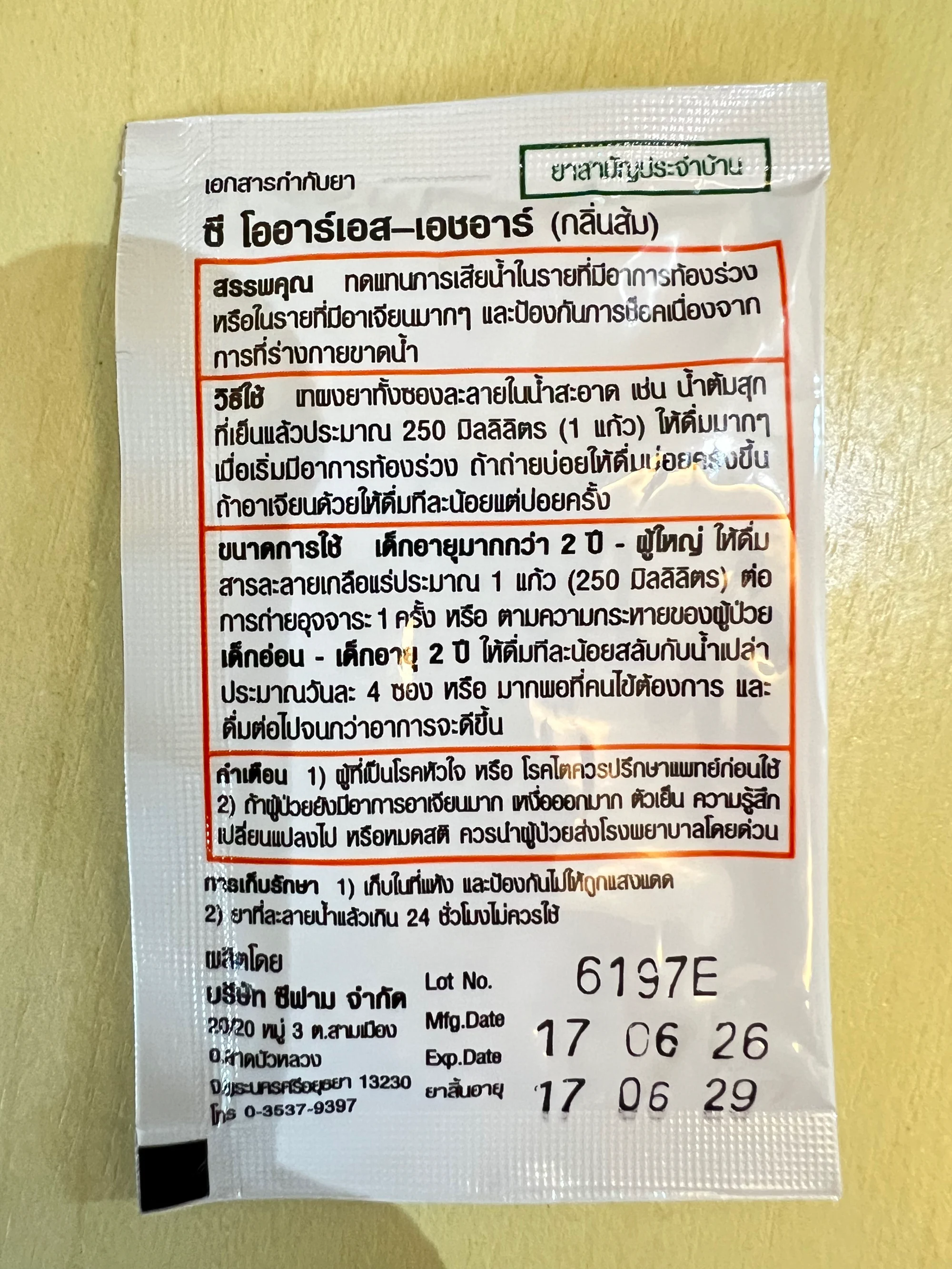
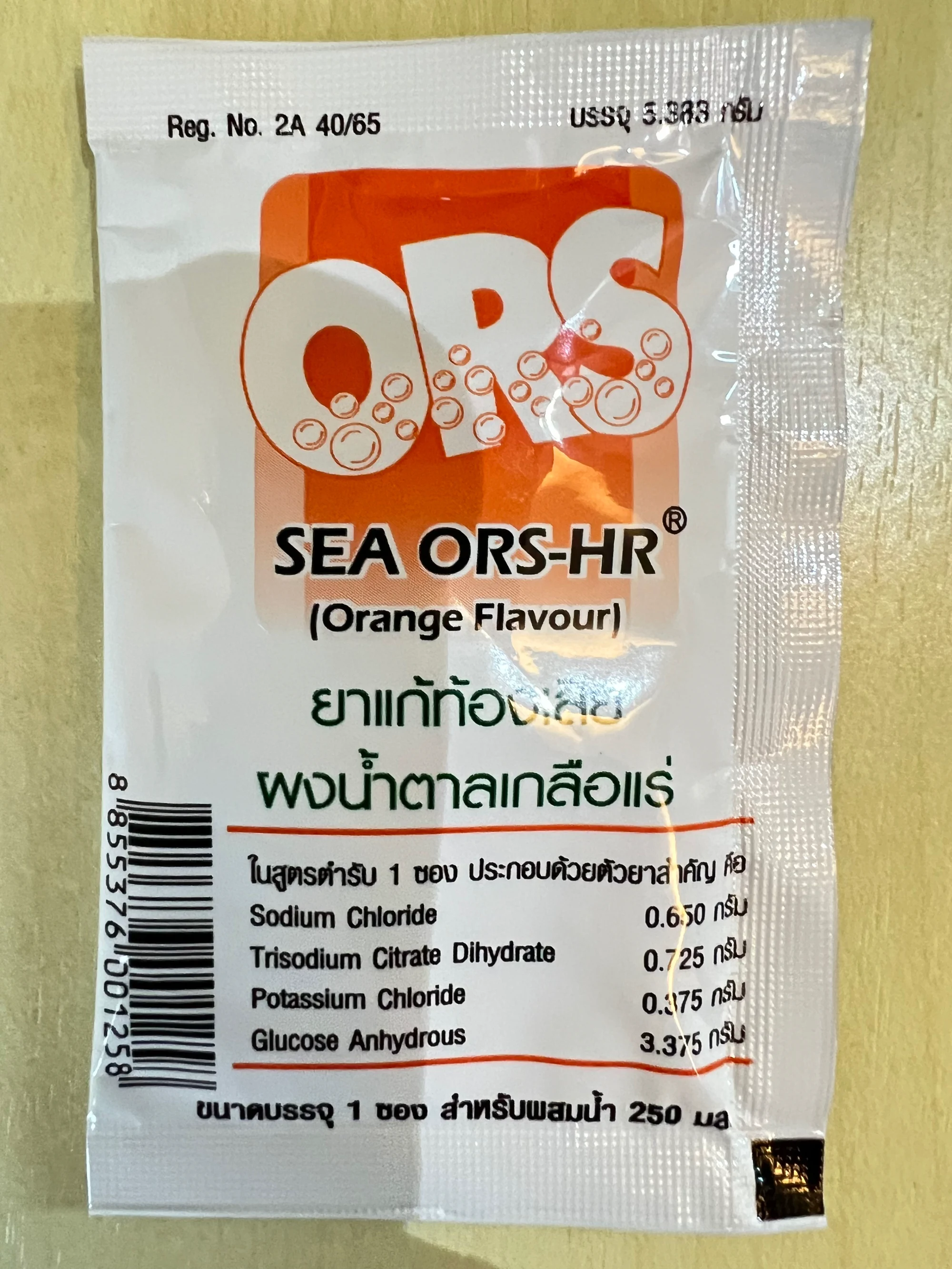
Preparation: One sachet in exactly 250 mL water.
| Calories | ~14 kcal |
|---|---|
| Glucose | 3.375 g |
| Sodium | ~426 mg; ~1,703 mg/L |
| Potassium | ~197 mg |
| Carbohydrate concentration | 1.35% |
Declared medicinal ingredients: 0.65 g sodium chloride, 0.725 g trisodium citrate dihydrate, 0.375 g potassium chloride, and 3.375 g glucose anhydrous.
Assessment: This exactly scales to the WHO reduced-osmolarity oral-rehydration formula. Its primary labelled purpose is diarrhoea and vomiting, and its sodium concentration is more than double that of most sports drinks. Its carbohydrate content is too low to provide meaningful exercise fuel.
Selective post-workout use: It can be useful after substantial exercise-induced dehydration, especially when rapid rehydration matters before another session or a salty meal is unavailable. In small randomized studies, some ORS formulations supported fluid balance when athletes consumed 125% of measured loss, while a higher-sodium solution improved retention versus water and a conventional sports drink within a 150%-of-loss protocol. Those studies tested other formulations, so applying the result to SEA ORS-HR is a reasonable physiological inference, not a direct product trial.
Not the routine during-workout choice: For ordinary 30–60-minute HIIT, its very high sodium and very low carbohydrate make it a poor default during exercise. This does not mean ORS is universally prohibited during exercise: it has been used during prolonged exercise in extreme heat, a specialized scenario outside this Thailand HIIT comparison.
Not a default all-day drink: A targeted serving can be reasonable after the heaviest sweat loss, but repeatedly sipping ORS without measuring losses may provide unnecessary sodium. Water and normal meals should remain the daily base; repeated routine use is better guided by measured sweat losses and medical factors.
Not complete recovery nutrition: One serving supplies only about 14 kcal and 3.375 g glucose, with no meaningful protein. Add a normal meal or snack when carbohydrate and protein replacement matter.
Best use: First, its labelled purpose—illness-related fluid loss. For exercise, reserve it for post-workout rehydration after a clearly large sweat loss rather than routine consumption.
Label cautions: Mix with the full 250 mL, discard after 24 hours, and consult a doctor before use if heart or kidney disease is present.
Product 8 · Leaderboard #5
Royal-D 20 g
 Open front label
View back label
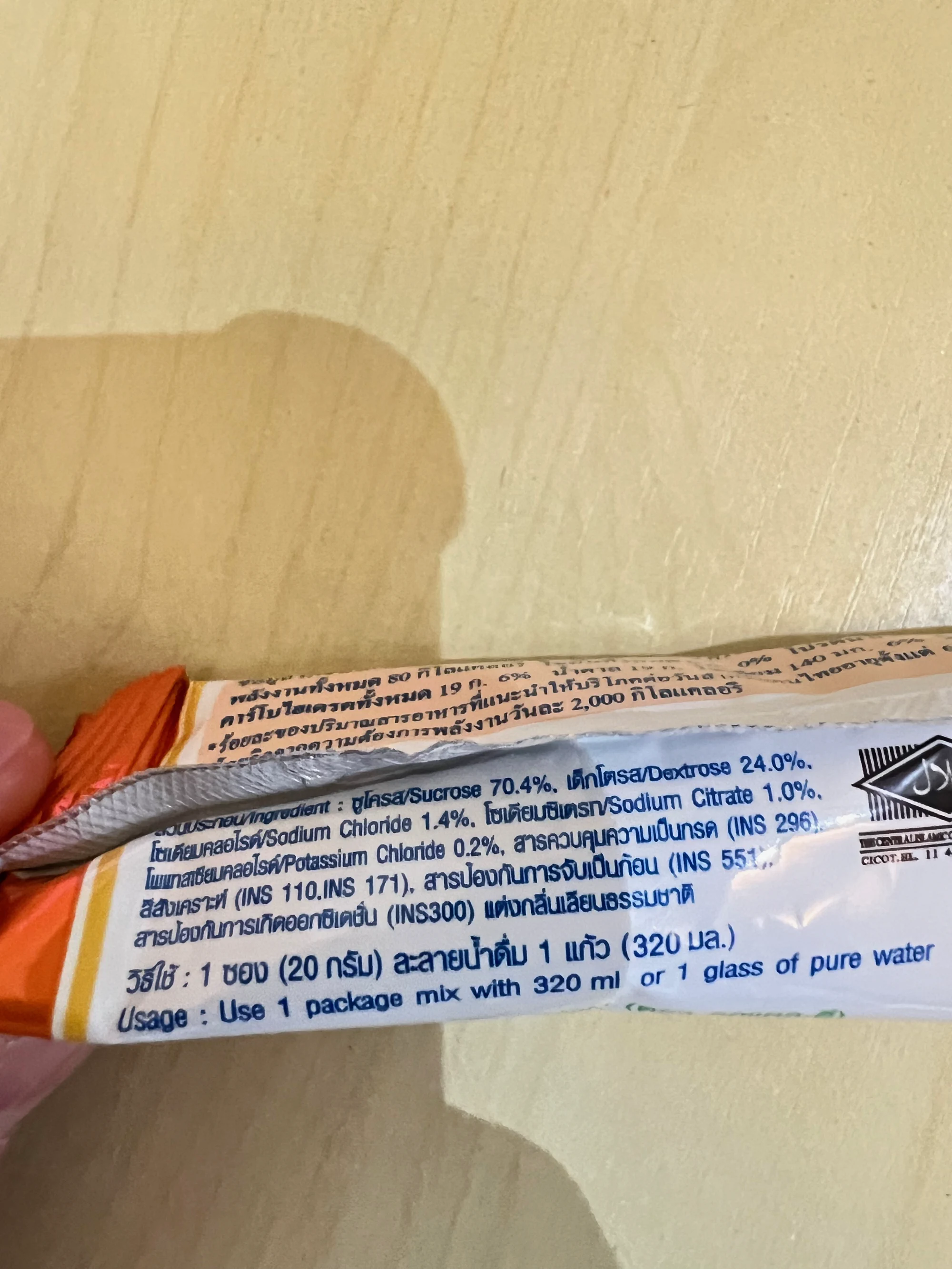
This was submitted as product “9” and is treated as the eighth product in this review.
This is a Royal-D-branded 20 g product. It has a different labelled formula and mixing volume from Royal-D 25 g, so the two are assessed separately rather than treating the 20 g version as a scaled serving.
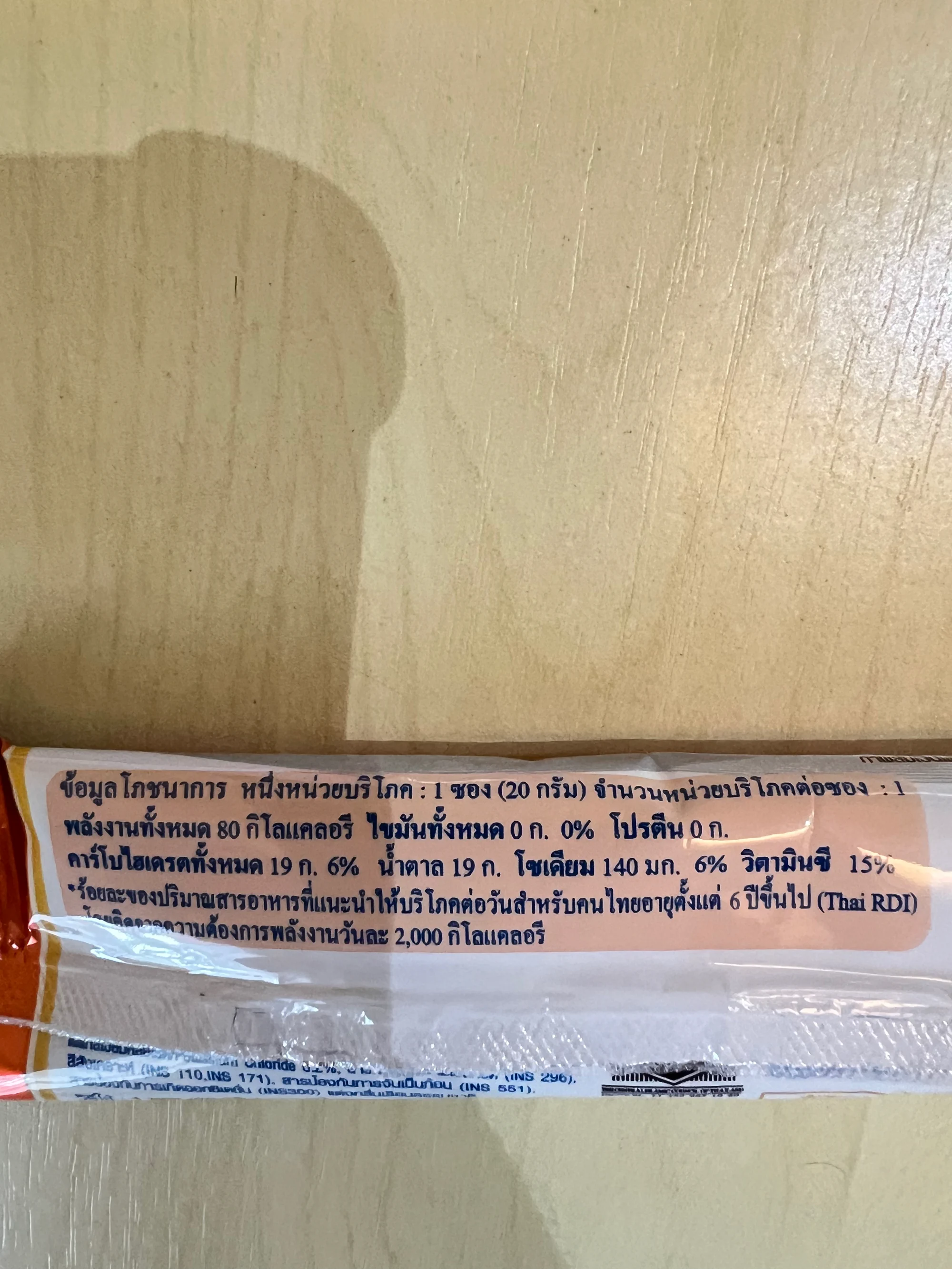
Preparation: One 20 g sachet in 320 mL water.
| Calories | 80 kcal |
|---|---|
| Carbohydrate / sugar | 19 g / 19 g |
| Sodium | 140 mg; ~438 mg/L |
| Potassium | ~21 mg |
| Carbohydrate concentration | ~5.9% |
| Vitamin C | 15% Thai RDI |
Declared formulation: 70.4% sucrose, 24% dextrose, 1.4% sodium chloride, 1% sodium citrate, and 0.2% potassium chloride. Additives include malic acid (INS 296), Sunset Yellow (INS 110), titanium dioxide (INS 171), silicon dioxide (INS 551), ascorbic acid (INS 300), and flavouring.
Assessment: A balanced carbohydrate concentration and the clearest nutrition panel in the group. Sodium is slightly below the conventional sports-drink range, making it more suitable for moderate than exceptionally heavy sweating. The vitamin C is a modest nutritional addition rather than a meaningful hydration advantage.
Best use: Shorter or moderately sweaty HIIT when some carbohydrate is wanted.
Main weakness: Lower sodium concentration than the leading options, with multiple non-functional additives.
Beyond 7-Eleven: three sugar-free alternatives
Simplify Lemon Lime 1000, SALZ Essentials Active Salt, and WILDER Performance Hydration are different from the eight convenience-store sachets above. All three separate electrolyte replacement from carbohydrate fueling: they provide concentrated minerals without the roughly 19–24 g of sugar found in the fully disclosed 7-Eleven sports products.
Sugar-free leaderboard for typical Thailand HIIT
This ranking prioritizes hydration fit for a typical 30–60-minute hot-weather HIIT session, not the biggest electrolyte number. It assumes the drink is prepared as directed, carbohydrate is available separately if needed, and there is no medical reason to restrict sodium or potassium.
| Rank | Product | Serving and water | Sugar | Elemental sodium | Sodium / litre | Best match |
|---|---|---|---|---|---|---|
| 1 | Simplify Lemon Lime 1000 | 7 g sachet in 350–500 mL | None | ~393 mg calculated from 1,000 mg sodium chloride reported by the permitted source guide | ~786–1,123 mg/L | Best all-round sugar-free fit for typical hot HIIT |
| 2 | SALZ Essentials Active Salt | 4.1 g scoop in 500–1,000 mL | None | 1,000 mg declared by the current manufacturer page | ~1,000–2,000 mg/L | Best unflavoured, adjustable high-sodium option |
| 3 | WILDER Performance Hydration | 10.9 g sachet in 500–750 mL | Manufacturer: zero sugar; photographed sachet: “No sugar added” | 1,000 mg declared | ~1,333–2,000 mg/L | Best flavoured formula for long or exceptionally sweaty work |
The ranking is specific to ordinary 30–60-minute HIIT, not a universal quality score. WILDER can move ahead for a long, exceptionally sweaty session; SALZ can be preferable when an unflavoured mineral mix or more dilution is useful. The SALZ range uses its current manufacturer directions. The permitted Russian guide independently estimated approximately 900–950 mg sodium per 4.1 g serving from the ingredient percentages, broadly consistent with the rounded 1,000 mg declaration.
Outside 7-Eleven · Sugar-free
Simplify Lemon Lime 1000
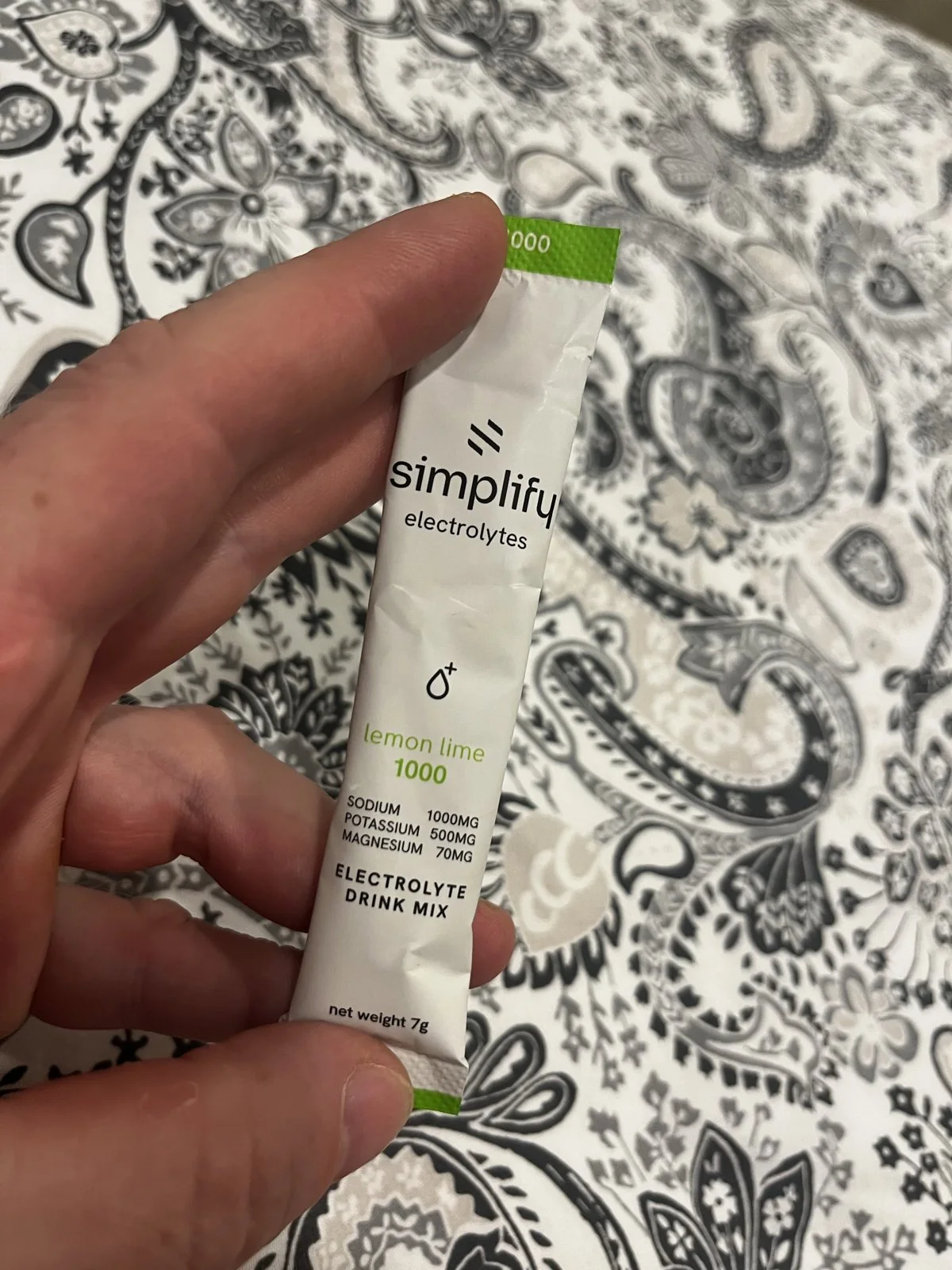 Open product photo
Photo courtesy of Pavel Rostovtsev; reused with permission.
The permitted source guide reports the prominent 1,000 / 500 / 70 mg figures as compound weights, not elemental sodium, potassium, and magnesium.
Preparation: One 7 g sachet in 350–500 mL water.
| Sugar | None |
|---|---|
| Sodium chloride | 1,000 mg |
| Elemental sodium | ~393 mg; ~786–1,123 mg/L |
| Potassium chloride | 500 mg; ~262 mg elemental potassium |
| Magnesium bisglycinate | 70 mg compound weight; elemental magnesium not separately disclosed |
Assessment: This is a relatively concentrated, sugar-free electrolyte drink. It is a logical option for a heavy sweater who does not need carbohydrate in the bottle or is getting fuel elsewhere. It is not automatically better than a conventional sports drink during longer, hard exercise, when carbohydrate can support performance.
Best use: Hot, sweaty training where approximately 400 mg sodium per bottle is appropriate and carbohydrate is handled separately.
Main caution: The sachet front can be read as if it contains 1,000 mg elemental sodium. The permitted source guide reports that figure as 1,000 mg sodium chloride, equivalent to approximately 393 mg elemental sodium. The elemental magnesium amount is also not disclosed.
Outside 7-Eleven · High-sodium · Sugar-free
SALZ Essentials Active Salt
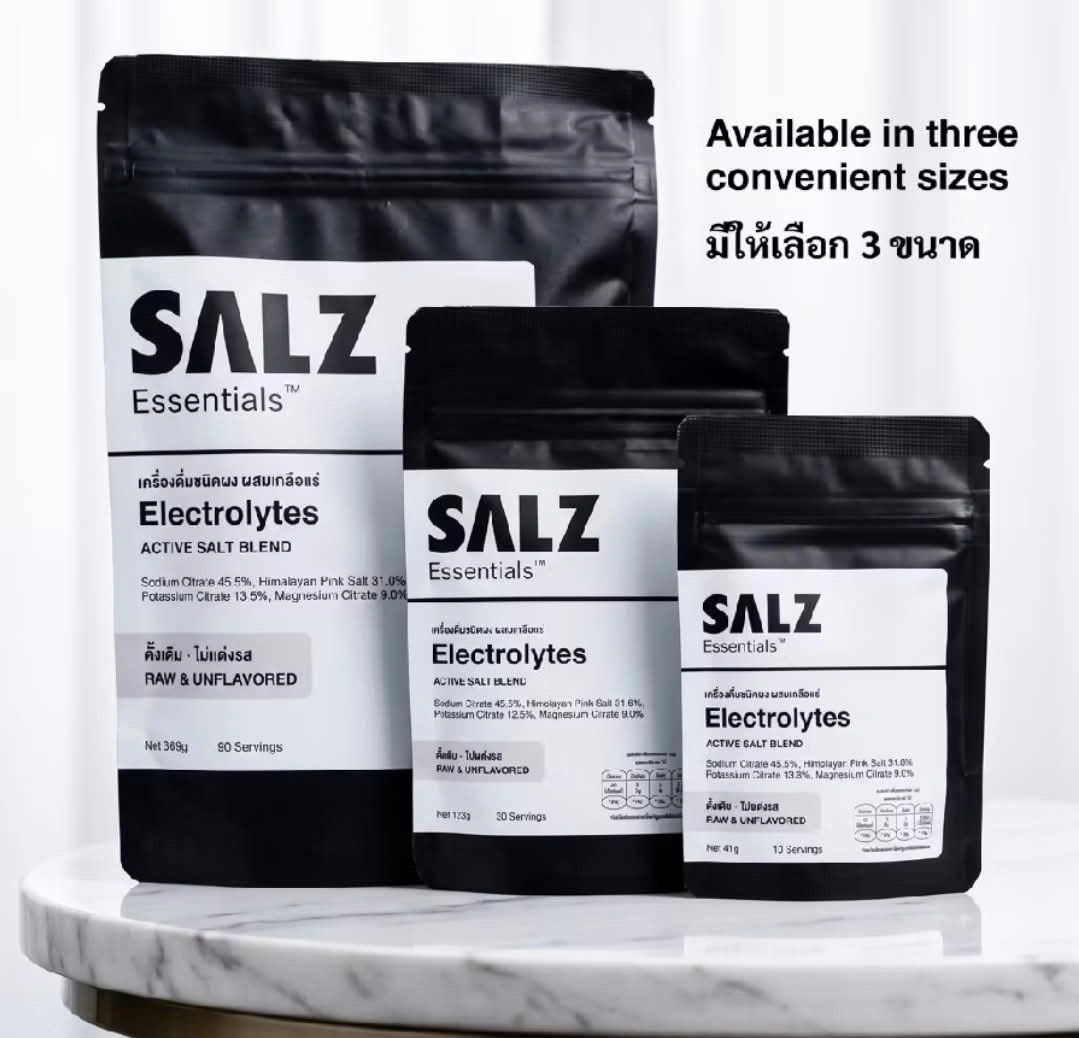 Open product photo
Photo courtesy of Pavel Rostovtsev; reused with permission.
This is a high-sodium mineral mix, not an oral rehydration solution and not complete exercise fuel.
Current preparation: One 4.1 g scoop in 500–1,000 mL water or another drink.
| Calories / sugar | 5 kcal / none |
|---|---|
| Sodium | 1,000 mg declared; ~1,000–2,000 mg/L |
| Sodium-to-potassium ratio | 5:1 declared |
| Ingredient percentages | 45.5% sodium citrate, 31% Himalayan pink salt, 13.5% potassium citrate, 9% magnesium citrate |
| Flavour and sweeteners | None |
Assessment: SALZ allows sodium to be dosed separately from carbohydrate and flavour. Its sodium concentration is well above a conventional sports drink, especially when mixed into 500 mL. That can suit a substantially sweaty or visibly salty athlete, but it is more than most people need for a short routine session.
Best use: Targeted replacement after large sweat losses, or during long, high-sweat training when personal fluid and sodium needs justify it and carbohydrate is supplied separately.
Main caution: One serving contains a substantial sodium dose. Do not treat it as a default all-day drink or assume more servings are always better. Individual sweat loss, total diet, blood pressure, kidney and heart health, and medication all matter.
Outside 7-Eleven · High-sodium · No added sugar
WILDER Performance Hydration
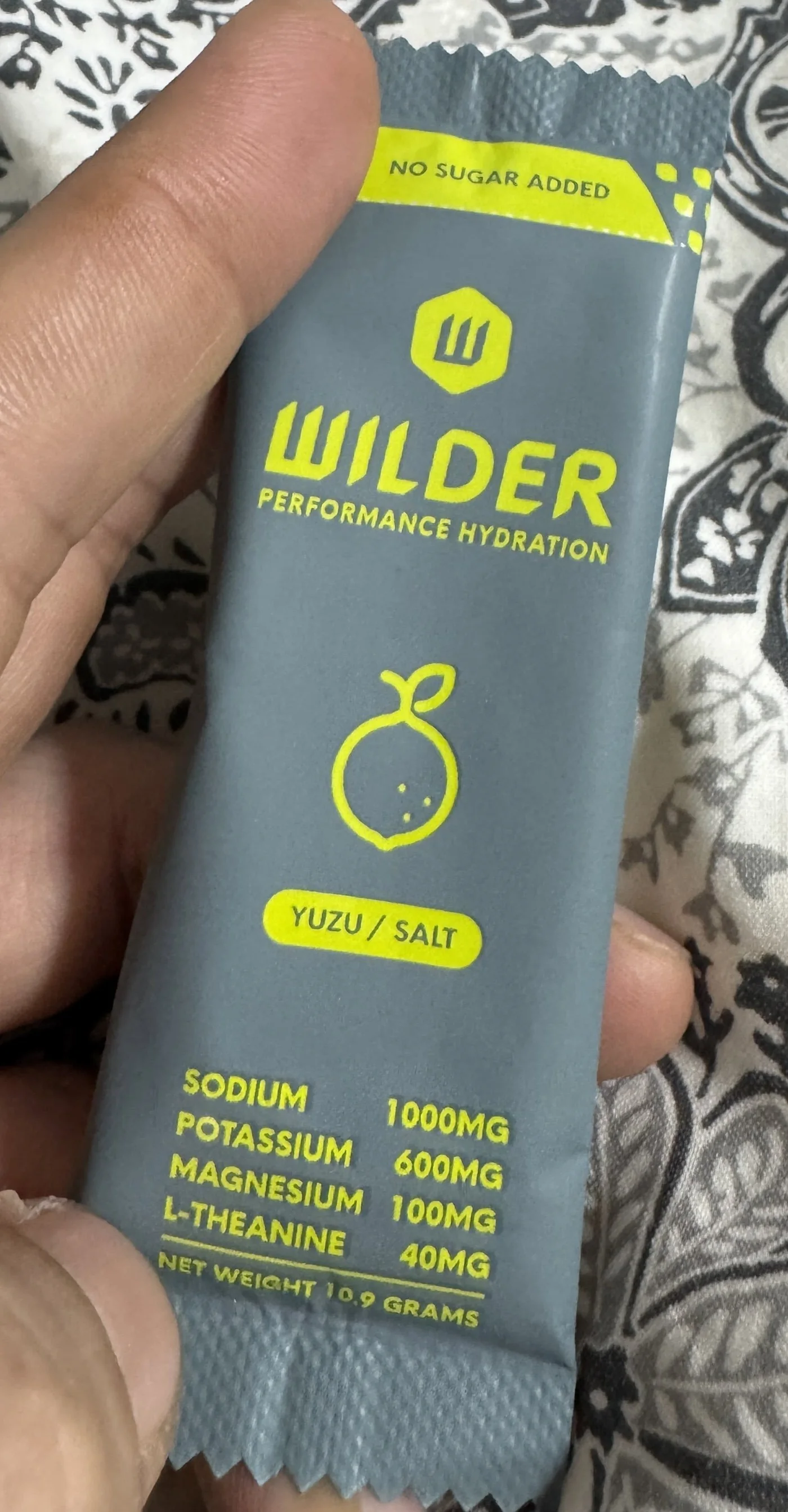 Open product photo
Photo by Andrey, supplied through Pavel Rostovtsev; reused with permission.
Unlike Simplify’s prominent 1,000 mg sodium-chloride figure, WILDER declares 1,000 mg of elemental sodium. The identical-looking number therefore represents a much larger sodium dose.
Current preparation: One 10.9 g sachet in 500–750 mL cold water. The manufacturer’s detailed mixing guide recommends 750 mL as its starting point and permits greater dilution for a milder drink.
| Sugar | The manufacturer says zero sugar; the photographed sachet states “No sugar added” |
|---|---|
| Sodium | 1,000 mg; ~1,333–2,000 mg/L at the primary 500–750 mL directions |
| Potassium | 600 mg |
| Magnesium | 100 mg |
| L-theanine | 40 mg; a non-electrolyte addition, not a hydration advantage |
Assessment: WILDER is the most concentrated flavoured option in this sugar-free group under its primary mixing directions. It provides a substantial declared dose of sodium plus potassium and magnesium. That profile is more compelling for a heavy or visibly salty sweater than for someone completing a routine short class.
Best use: Longer work in Thai heat, exceptionally sweaty training, hiking or endurance sessions, or a second session when carbohydrate is supplied separately.
Main caution: One sachet provides 1,000 mg sodium. That can be excessive as a default for ordinary 30–60-minute HIIT or casual all-day sipping, and it is not complete exercise fuel. L-theanine may be a pleasant extra, but it should not drive the hydration decision.
Product data and photographs in this section were adapted from Pavel Rostovtsev’s Russian electrolyte guide with the author’s permission. The WILDER photograph was contributed by Andrey and supplied through Pavel with permission to reuse it. Current manufacturer information was checked on 17 August 2026.
Methodology and limitations
- This report evaluates labels, not laboratory-tested contents.
- Several sodium figures are estimates calculated from sodium chloride and sodium citrate percentages. The hydration form of sodium citrate and label rounding create small uncertainties.
- Newtower and Royal-D 25 g omit information needed for exact sugar or calorie calculations.
- Taste, gastrointestinal tolerance, price, and individual sweat rate are not assessed.
- Simplify, SALZ Essentials, and WILDER are presented outside the 7-Eleven leaderboard. Their figures come from manufacturer information, product labels, and the permitted source guide, not laboratory testing by MyFitMate.
- Magnesium is absent from the eight 7-Eleven formulations, but this was not treated as a disadvantage because sodium is the primary electrolyte of interest for sweat-fluid replacement, and magnesium in sports drinks has not shown a clear additional hydration benefit.
- People with kidney disease, heart disease, hypertension, diabetes, or medically prescribed sodium or fluid restrictions should obtain individualized medical advice.
Sources
- Australian Institute of Sport — Sports Drinks guidance
- World Health Organization — Oral Rehydration Salts
- National Athletic Trainers' Association — Fluid Replacement for the Physically Active
- Peden et al. — Post-exercise rehydration using commercial oral rehydration solutions
- Kamijo et al. — Oral rehydration solution after exercise, fluid balance, and endurance performance
- Pavel Rostovtsev — Russian electrolyte guide and additional Simplify/SALZ/WILDER analysis (adapted with permission)
- Simplify — official Lemon Lime 1000 product listing
- SALZ Essentials — official Active Salt product page
- WILDER — official Yuzu electrolyte product page and current mixing guide