What the Phuket training community says
When putting this guide together, we went through recent questions, replies and first-hand accounts from people training around Fitness Street and elsewhere in Phuket. The experiences were mixed. Some people said they had trained for months without a diagnosed skin infection; others described a rash or infected cut costing them training days, needing treatment or returning later. These stories cannot tell us exactly where an infection started or whether any gym caused it, but they do show which problems and habits matter to people training here.
One message came through clearly: the basic habits matter. People repeatedly mentioned showering as soon as class ends, wearing fresh kit, washing gis, rashguards, wraps and towels after every session, separating wet gear from clean clothes, looking after cuts and checking the skin each day. They also advised sitting out when a mark looks suspicious and asking a gym directly how it cleans mats and shared equipment.
There was much less agreement about special products. Suggestions ranged from antibacterial body wash and essential oils to strong antiseptics, very hot laundry cycles and home remedies. You do not need an elaborate routine. A sensible starting point is ordinary soap and water, clean and dry kit, prompt care for cuts, not sharing personal items, properly cleaned training surfaces and getting a suspicious rash checked early.
The 60-second prevention checklist
Scan the face, neck, ears, arms, hands, torso, knees, feet and areas rubbed by gloves, pads or clothing. Look for a new rash, sore, blister, crust, swelling or drainage.
Wash a fresh scrape or blister with soap and water, dry it, and use a clean, dry dressing that will stay intact. Do not train if it is draining or looks infected.
Do not pull yesterday’s damp wraps or rashguard from the bottom of a backpack. Keep clean gear physically separate from everything used.
Shower as soon as class ends. Wash every used garment, wrap and towel, then dry it completely before it returns to the clean side of your bag.
Do not share towels, razors, clothing, wraps, water bottles or ointment from an open tub. Clean loan gear before another person uses it.
One missed session is easier to recover from than an infection passed to a partner or allowed to become more serious.
Before, during and after training
Before class
- Start clean. Wear a freshly washed gi, belt, rashguard, spats, shorts, shirt and wraps as applicable. A garment worn for one session belongs in the wash before the next one.
- Check your skin in good light. Do not rely only on bright-red colour: colour change can be less obvious on darker skin. Compare it with the surrounding skin and pay attention to pain, warmth, swelling, texture and change from normal.
- Deal with clean cuts before contact. Wash with plain soap and running water, pat dry and apply a clean, dry dressing. If the dressing will not stay secure through clinching or grappling, sit out.
- Keep fingernails and toenails short and clean. This reduces scratches and places where fungi can collect.
- Avoid cosmetic body shaving around training. Shaving can create irritation, folliculitis and tiny breaks in the skin. If hair management is necessary, trimming is generally less traumatic.
- Clean your hands. Soap and water are preferred when they are visibly dirty; alcohol hand rub is useful when a sink is not available.
During class
- Do not share towels, razors, clothing, wraps or skin-contact protective gear unless the item has been properly cleaned between users.
- If a cut opens or bleeding starts, leave the activity. Return only after the bleeding has stopped, the wound has been cleaned and securely covered, and any blood on skin, clothing, mats or equipment has been handled safely.
- Do not touch, squeeze or repeatedly inspect another person’s lesion. Tell the coach discreetly and let the person arrange appropriate assessment.
- Keep outdoor footwear off training surfaces. Wear sandals in communal shower and changing areas, then remove them where the gym requires.
Immediately after class
- Shower immediately with liquid soap. Ordinary soap and water are the baseline. Do not share a bar of soap. If no shower is available, change out of wet kit and shower properly as soon as practical.
- Change into clean, dry clothes. Do not sit in a café, scooter home for an hour or start a recovery session in a soaked rashguard or training shorts.
- Bag used items separately. Put the gi, belt, wraps, rashguard, spats, shorts and towel into a dedicated washable or wipeable bag. Empty it promptly rather than sealing damp kit overnight.
- Wash after every use and dry completely. Follow garment labels and use normal detergent. CDC athlete guidance favours complete machine drying for MRSA precautions; if an item cannot be tumble-dried, follow its care label and do not use it again while damp.
- Clean non-washable equipment. Wipe gloves, shin guards, headgear and your own pads according to the manufacturer’s instructions, including seams and skin-contact areas, then open them fully and allow them to dry.
Clothing can reduce friction and abrasions, but a rashguard is not an infection-proof barrier. It becomes another contaminated item if it is reused without washing.
Four common infections to recognize
This is a stop-training guide, not a visual diagnosis tool. Different infections and non-infectious rashes can resemble one another, and MRSA cannot be identified by appearance alone. A clinician may need an examination, skin scraping, swab or culture.
| Condition | What may be visible or felt | How it can spread | What to do |
|---|---|---|---|
| Staph / MRSA Bacterial | A painful, warm, swollen bump or area; pus or drainage; sometimes fever. Colour change can be subtle on darker skin. | Contact with infected skin or wounds and items or surfaces that touched infected skin. Cuts and abrasions can be entry points. | Stop contact, cover with a clean dry dressing and obtain prompt medical care. Do not pop, squeeze or drain it yourself. A laboratory specimen is needed to establish MRSA. |
| Ringworm / tinea Fungal | Often itchy and scaly and sometimes ring-shaped. It may look red on light skin and grey or brown on darker skin; other rashes can look similar. | Direct skin contact, infected people or animals, shared towels and clothing, and contaminated surfaces such as changing-room floors. | Stop contact and arrange assessment, especially for scalp, widespread, severe or persistent disease. Follow antifungal directions for the full course. Do not use steroid cream on a rash that could be ringworm. |
| Impetigo Bacterial | Bumps that can become pustules and then thick, adherent, often golden or honey-coloured crusts, commonly on exposed skin. | Close contact, particularly contact with drainage. Cuts and abrasions increase risk. It occurs in any climate and is more common in tropical and subtropical settings. | Stop contact and see a clinician. Appearance cannot reliably distinguish strep from staph, so antibiotic choice should not be guessed or borrowed. |
| Herpes gladiatorum Usually HSV-1 | Burning or tingling followed by closely grouped painful blisters, often on the face, head or neck. A first episode can include fever, tiredness or swollen glands. | Primarily direct skin-to-skin contact. This makes BJJ, submission grappling and prolonged Muay Thai clinching relevant even when mats are cleaned well. | Stop all contact and seek prompt medical assessment. Do not cover active lesions in order to train. Eye symptoms need urgent eye care. |
Not every spot is contagious: acne, friction rash, eczema and insect bites can look concerning. The safe response to an unexplained changing lesion is assessment, not a guess made from a photograph.
What to do with a suspicious spot or wound
Step 1
Stop contact training
Skip rolling, clinching, sparring, partner drills and shared pads. Tell the coach privately so the gym can protect partners and clean anything that may have been contaminated.
Step 2
Leave it alone
Do not pick, pop, lance or drain a bump. Do not scratch a scaly rash. Wash your hands after touching the area or changing a dressing.
Step 3
Use simple wound care
For a fresh clean abrasion, wash with plain soap and water, dry it and apply a clean, dry dressing. Surface disinfectant, mat spray, concentrated Dettol and household cleaner do not belong on skin or wounds.
Step 4
Arrange assessment early
Seek prompt care for pus, increasing pain, warmth or swelling; spreading colour change; honey-coloured crusts; grouped blisters; or a changing itchy, scaly rash. Mention contact-sport exposure and recent travel.
Step 5
Avoid shared water
Do not use a pool, hot tub, therapy pool, communal ice bath or similar shared-water facility with an open wound or active infection. A waterproof dressing is not permission to enter.
Step 6
Clean the personal trail
Launder clothing, towels and bedding that contacted the area. Clean your bag and personal equipment appropriately, keep dressings contained, and do not share personal items.
When to stop training and when to seek urgent care
Stop contact training and arrange prompt assessment
- Pus, drainage, an enlarging bump, increasing pain, warmth or swelling.
- A red, brown, purple, grey or otherwise discoloured area that is spreading or changing from your normal skin tone.
- Honey-coloured crusts, grouped blisters, or an unexplained itchy and scaly patch.
- A lesion that is not improving, keeps returning, or is accompanied by fever.
- Any suspicious lesion if you have diabetes, reduced immunity, poor circulation or another condition that raises infection risk.
Seek immediate medical attention
- An affected area that is spreading quickly, or a suspected skin infection accompanied by fever or chills.
- Very high temperature or severe chills, fast breathing or heartbeat, purple patches, dizziness or fainting, confusion, cold or clammy skin, or reduced responsiveness.
- Eye pain, a worsening red eye, blurred vision, light sensitivity or watery discharge. HSV keratitis can scar the cornea and threaten sight. Remove contact lenses if worn and contact an eye doctor immediately.
For local clinic and laboratory context, see MyFitMate’s Phuket clinics, blood tests and healthcare-services guide. For a medical emergency in Thailand, call 1669.
Questions to ask a Muay Thai or BJJ gym
A tidy-looking mat is not proof of an effective process, and a chemical smell is not a cleaning certificate. A good answer is specific enough that staff can explain who cleans, what is cleaned, when it is cleaned and how the product is used.
Ask whether bare-skin surfaces are cleaned every training day and between heavily used sessions, and whether the floor is allowed to dry before use.
Disinfectants need the correct dilution and wet-contact time on the label. A fast mist followed by an immediate dry wipe may not meet that instruction.
Thai pads, focus mitts, headgear and loan gloves touch hands, faces and forearms. Ask how they are cleaned between users and dried.
A clear process should pause contact, protect privacy, direct the athlete to assessment and avoid treating tape as medical clearance.
Activity should stop until bleeding is controlled, the wound is covered, contaminated clothing or skin is addressed, and the surface is disinfected safely.
Reliable basics include liquid soap, hand-cleaning supplies, clean dressings, covered waste and a way to report a concern.
CDC guidance says shared equipment should be cleaned after use and allowed to dry, with attention to surfaces that touch bare skin. Staff should follow the disinfectant label and equipment manufacturer’s instructions. Cleaners belong on compatible surfaces, never on athletes.
Safe return to contact training
There is no single “three-day rule” for every skin problem. Published NFHS and NCAA wrestling standards are useful conservative references because they address intense skin-to-skin contact, but they are not Thai law, a diagnosis or a substitute for a clinician. BJJ and Muay Thai gyms may have stricter rules. The Association of Ringside Physicians also notes that many clearance thresholds are consensus-based rather than proven guarantees of non-infectiousness.
| Condition | Published contact-sport minimum | Safest visitor rule |
|---|---|---|
| Impetigo, boils, cellulitis, staph or MRSA | NCAA wrestling criteria use at least 72 hours of directed antibiotics, no new lesions for 48 hours and no moist, draining or exudative lesions. An active purulent lesion cannot simply be covered for participation. | Meet every criterion, be free of fever, malaise and other systemic symptoms, finish treatment as directed and obtain clinician clearance. A shorter school or workplace exclusion period is not clearance for rolling or clinching. |
| Body or scalp ringworm | NFHS uses at least 72 hours of oral or topical treatment for skin ringworm and at least 14 days of oral treatment for scalp ringworm. NCAA treats 72 hours of effective prescription topical treatment as the standard but has a documented, treated and coverable competition exception that should not be generalized to recreational training. | Treat 72 hours as a participation minimum, not the full treatment course. Get the diagnosis right, continue treatment for the directed duration and follow the stricter clinician or gym decision. |
| Herpes gladiatorum | NCAA requires at least 120 hours of systemic antiviral treatment, no new blisters for 72 hours, no systemic symptoms and all lesions dry beneath a firm adherent crust. NFHS uses at least 10 days for a first episode, extended to 14 days with fever or swollen lymph nodes; recurrent outbreaks require at least 120 hours plus the lesion criteria. The Association of Ringside Physicians recommends 6–10 days of oral antiviral treatment for primary or recurrent disease. | Medical clearance is essential. Five days is not an all-purpose waiting period. For ordinary training, use the conservative end of the applicable guidance and meet every symptom and lesion criterion. Active herpes cannot be taped over for training. |
| Clean abrasion or blister | Keep a clean, uninfected abrasion covered until healed. Return only after bleeding has stopped and when the dressing will remain secure throughout activity. | If it is weeping or draining, or the dressing cannot remain intact through contact, sit out. Pain, warmth, swelling, crusting or blisters require assessment. |
Return-to-contact minimums do not mean the infection is cured, do not shorten the prescribed treatment course and do not override a clinician, coach, promoter or gym policy.
A simple 7-Eleven kit for training days
You do not need to order specialist “fighter soap” before arriving in Phuket. If you have forgotten your toiletries, a quick stop at 7-Eleven should cover the basics. Stock varies between branches, but look for:
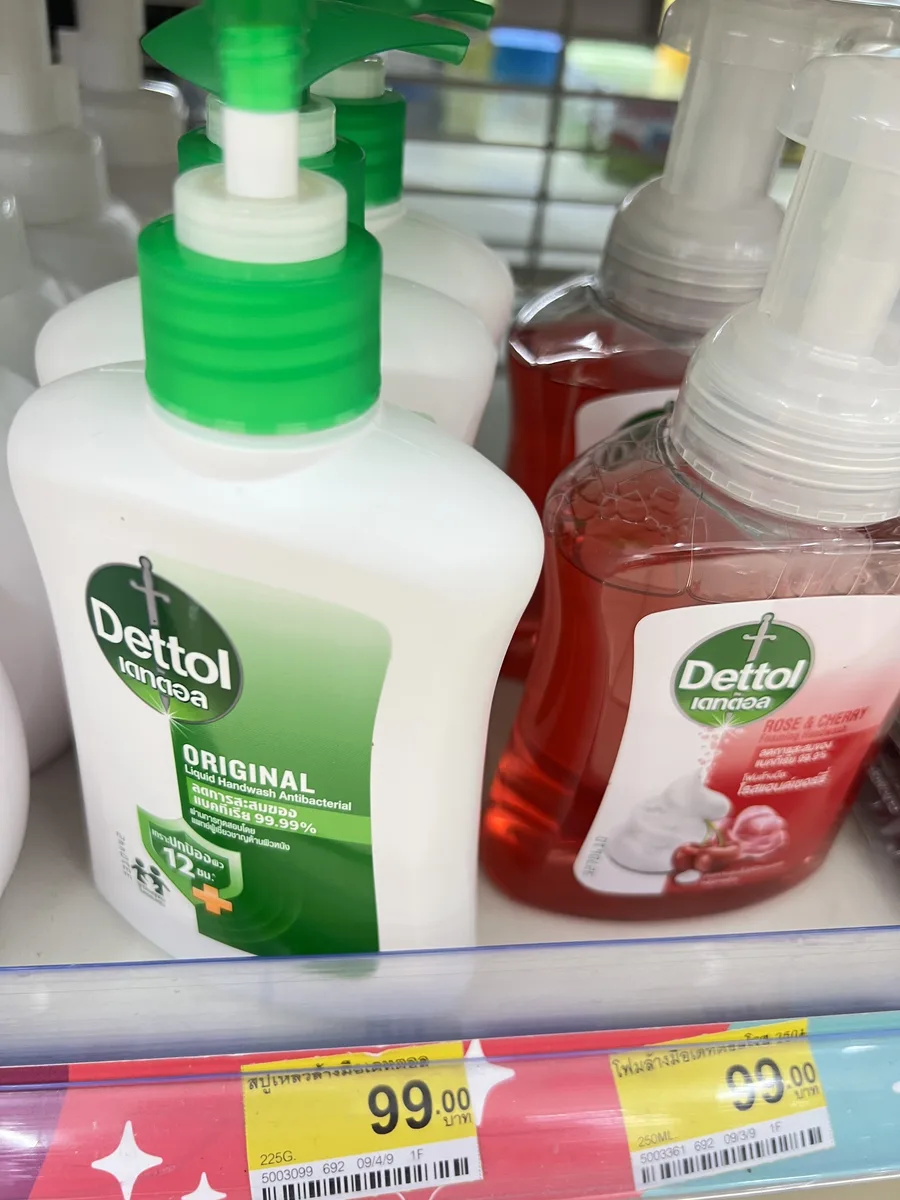
- A small bottle of liquid body wash. Dettol Original 180g is one easy-to-recognise option, although any ordinary body wash that suits your skin is fine. Take your own and shower as soon as class ends.
- Hand sanitiser containing at least 60% alcohol. A pocket-size product such as Dettol 70% hand sanitiser is useful for your hands before and after class when you cannot get to a sink. It is not for cleaning wounds or wiping down your body, and it does not replace a shower.
- Waterproof plasters. Keep a few for small, clean cuts and scrapes. The dressing must remain clean, dry and secure during training. If a wound is draining or a mark looks infected, covering it is not enough—sit out.
- A clean towel and a separate bag for wet kit. Use your own towel and keep sweaty wraps and clothing away from everything clean until you can wash them.
What we found at a Phuket 7-Eleven
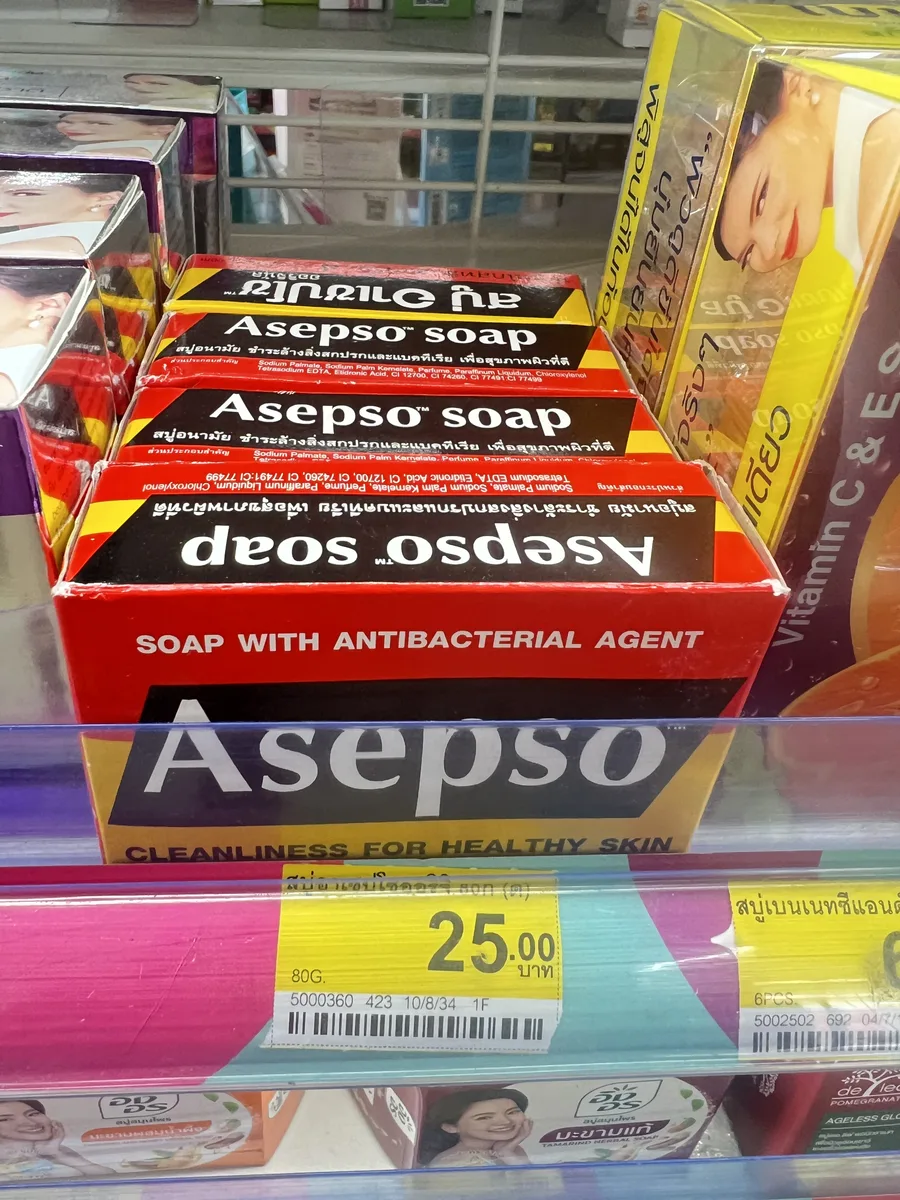
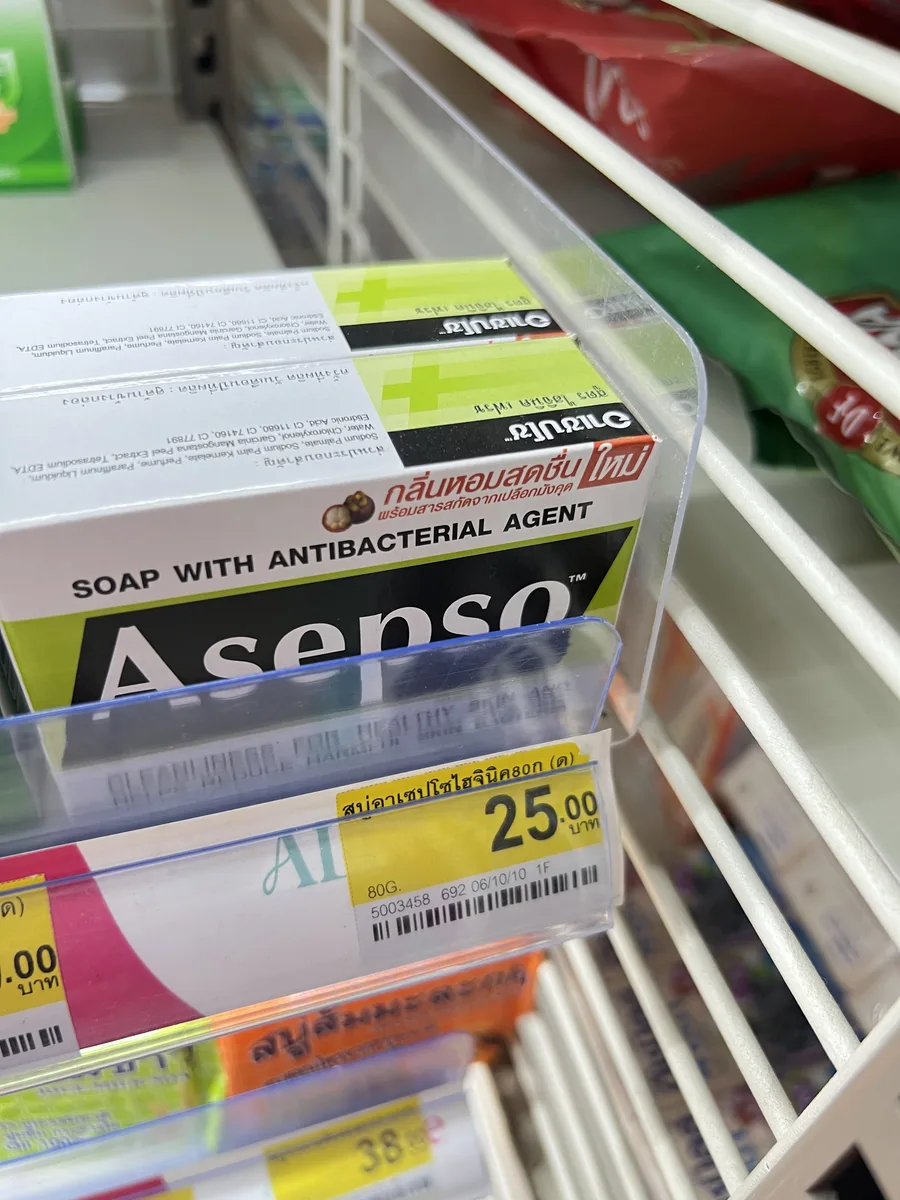
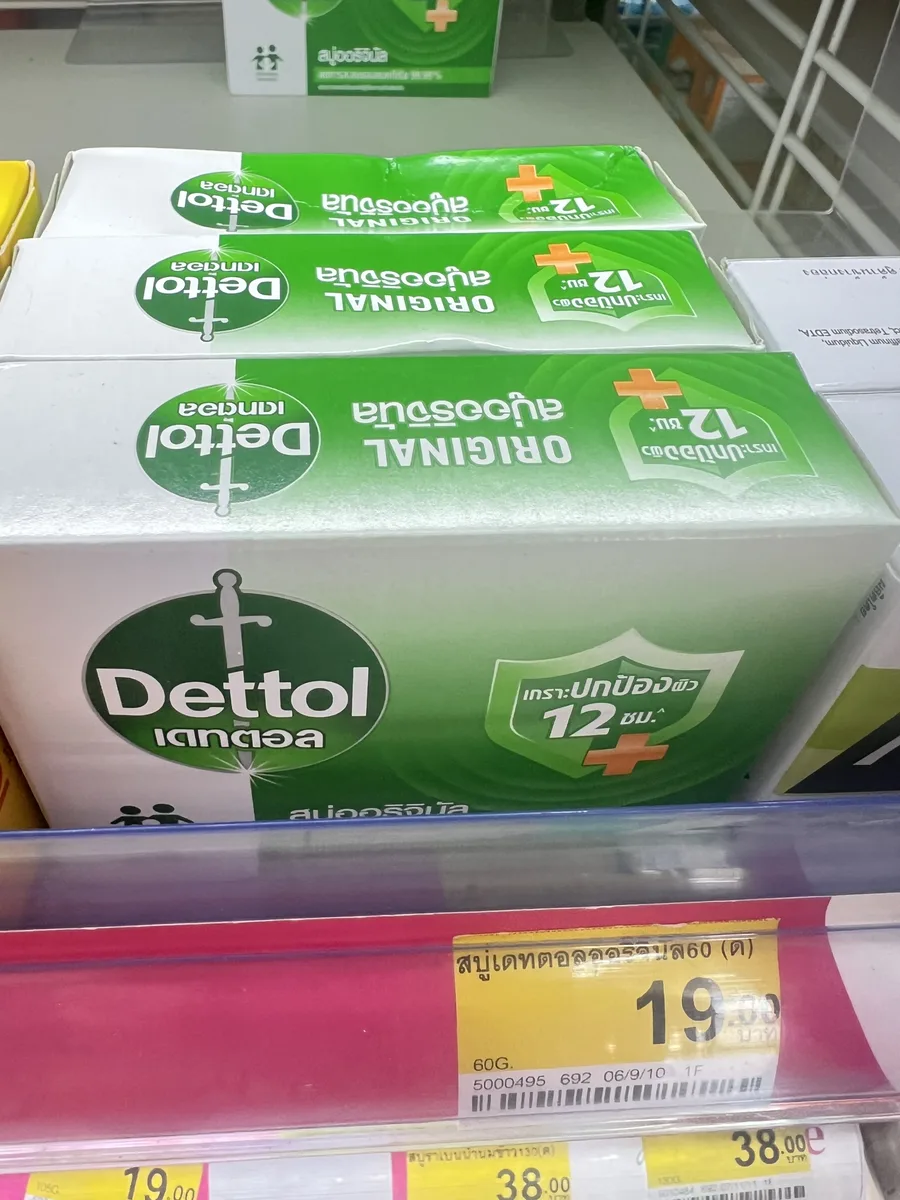
These are real shelf examples photographed in one Phuket branch on 8 September 2026. They are convenient soap options, not a ranking and not evidence that an antibacterial-labelled product prevents contact-sport infections better than ordinary soap.
Should you use anything before training?
Nothing special needs to be rubbed over your skin. Arrive clean, wear fresh kit, check your skin and wash your hands. Hand sanitiser is a useful backup for your hands when soap and water are unavailable.
Avoid coating your body with multipurpose disinfectant, strong antiseptics or essential-oil mixtures. They may irritate the skin, and they do not make a suspicious rash safe for contact training.
Products, prices and availability vary between 7-Eleven branches. The shelf prices above are a one-branch snapshot from 8 September 2026. Named products are examples, not required purchases or paid recommendations.
What to pack for a Phuket training camp
Phuket’s heat and humidity make a generous kit rotation practical: drying can take longer, and two-a-day training creates more laundry than many visitors expect.
Fresh rotation
One clean set per session
Bring enough gis, rashguards, spats, shorts, shirts and wraps to avoid reusing anything damp. Include a clean towel for each shower or arrange daily laundry.
Separation
Clean bag and dirty-kit bag
Use a dedicated washable wet bag or packing cube for used items. Empty and clean it regularly; do not let sealed damp gear become permanent luggage.
Shower kit
Liquid soap and sandals
Carry personal liquid soap, shower sandals, clean underwear and dry clothes. Hand sanitizer is useful between sinks, but it does not replace a post-training shower.
Minor wound kit
Clean dressings, gauze and tape
Pack supplies for a simple clean scrape. They are not a kit for hiding an infection. Replace wet or dirty dressings and wash hands before and after wound care.
Laundry
Detergent and a drying plan
Know whether your accommodation has a machine, dryer or same-day service. Follow care labels and leave enough time for everything to dry completely.
Gear care
Maker-approved cleaning supplies
Bring an appropriate wipe or cleaner for your own non-washable equipment and a cloth for drying it. Never use surface cleaner on your body or wound.
Common myths and risky advice
“Tape it and train.”
Wrong for a suspected infection. Tape alone is never clearance. Active purulent bacterial lesions and active herpes cannot be covered into participation; ringworm may be covered only after diagnosis, effective treatment and explicit clinician and sport-policy permission.
“It must have come from a dirty mat.”
Usually impossible to prove. Bacteria and fungi can spread through skin, wounds, shared items and surfaces. Herpes gladiatorum is primarily spread by direct skin contact. Cleaning matters, but a single source should not be guessed.
“Antibacterial is always better.”
Plain soap is the routine baseline. Do not improvise with Dettol: formulations differ, and a surface-only product or undiluted antiseptic must not be used on skin. If a product is specifically labelled for skin use, follow that exact label. Bleach and mat disinfectant never belong on skin. Routine chlorhexidine or decolonization should be clinician-led, not a travel hack.
“Tea tree oil or an essential oil will sort it out.”
Do not substitute an essential oil or other home remedy for diagnosis and proven treatment.
“A steroid cream will calm ringworm.”
It can worsen and disguise it. CDC advises against steroid creams for diagnosed or suspected ringworm. A clinician can help distinguish fungal infection from eczema and other rashes.
“I should take medicine just in case.”
Do not self-start prophylaxis. Antibiotics, antifungals, antivirals, nasal ointments and medicated washes have indications, adverse effects and resistance implications. Selected recurrent cases need a clinician’s plan.
“Seventy-two hours means cured.”
It is only one possible clearance minimum. The condition-specific criteria must all be met, treatment must continue as directed, and the clinician or gym may require longer.
“A rashguard makes me safe.”
It can reduce friction, not eliminate transmission. Direct contact still occurs, lesions may sit outside the garment, and the rashguard itself must be washed after every use.
Sources and limitations
This guide combines anonymous, aggregate themes from local training-community discussions with public-health and contact-sport medical guidance. The community material was reviewed as practical experience only. No names, quotations, screenshots, post links, prevalence estimates, outbreak claims or allegations about a named gym are reproduced. Individual stories cannot establish diagnosis, transmission route or cause.
The medical sources were checked on 5 September 2026. CDC guidance supplies the public-health, wound-care, recognition and facility-cleaning baseline. The 2025 NFHS guidance, 2025–27 NCAA wrestling rules and Association of Ringside Physicians position statement supply contact-sport context. Those participation criteria were developed principally for US wrestling and combat-sport settings; applying them to recreational Muay Thai and BJJ in Phuket is a cautious extrapolation, not a local rule.
This article does not compare or audit Phuket gyms. We did not inspect mats, observe cleaning, test surfaces, review medical records or measure local infection prevalence. A gym can follow a sensible process and infections can still occur; a clean-looking room can also conceal a weak process. Ask directly and judge the specificity of the answer.
Medical and public-health sources
- CDC — MRSA prevention and control for athletes
- CDC — hand-sanitiser guidance
- US FDA — plain soap and antibacterial-soap evidence
- US NCCIH — tea-tree-oil evidence and safety
- CDC — MRSA prevention in athletic facilities
- CDC — MRSA basics, warning signs and diagnosis
- CDC — Ringworm basics
- CDC — Ringworm prevention
- CDC — Ringworm treatment and steroid-cream warning
- CDC — Clinical guidance for impetigo
- CDC — Cellulitis symptoms and urgent warning signs
- NHS — Cellulitis and emergency warning signs
- CDC — HSV keratitis and urgent eye symptoms
- NFHS Sports Medicine Advisory Committee — 2025 general sports-hygiene and skin-infection guidance
- NFHS — wrestling skin-lesion medical release and treatment minimums
- NCAA — 2025–27 Men’s Wrestling Rules Book, Appendix C
- Association of Ringside Physicians — position statement on skin infections in combat-sport athletes
- Infectious Diseases Society of America — skin and soft-tissue infection guideline
- Thailand Government Contact Center — emergency medical call number 1669